


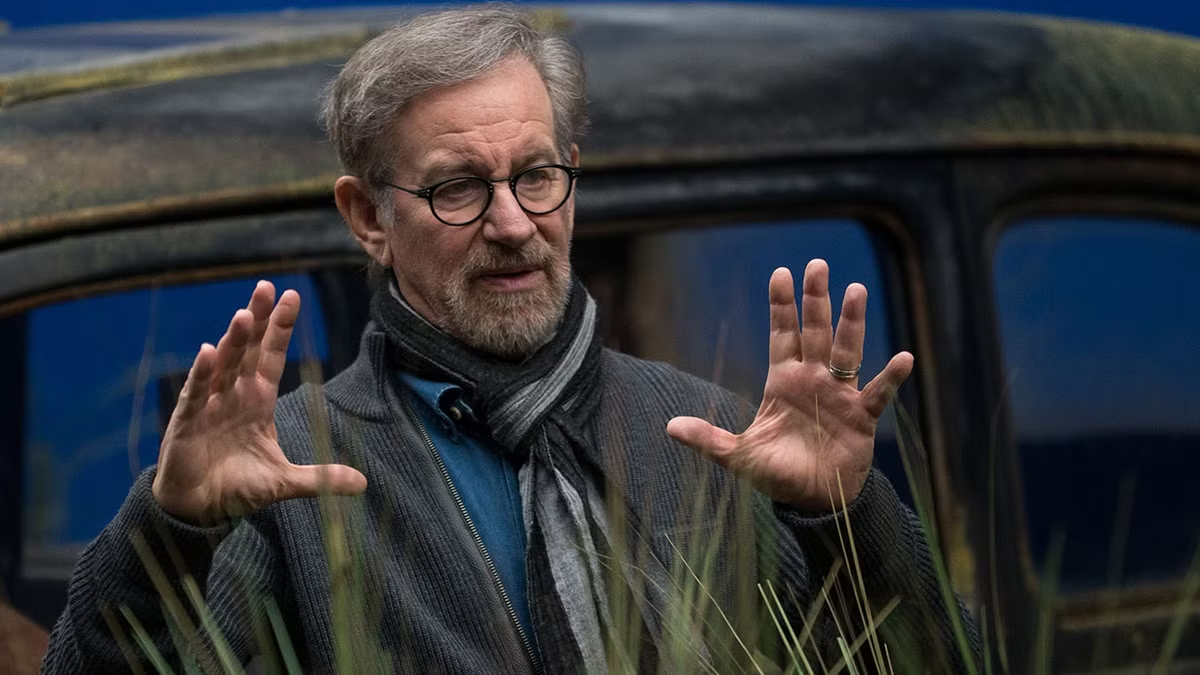
Few filmmakers have shaped modern cinema as profoundly as Steven Spielberg. His work spans decades, genres, and generations, creating a legacy that continues to influence both audiences and filmmakers. When discussing Steven Spielberg movies, what stands out is not just their popularity but their emotional depth, technical brilliance, and timeless appeal.
From thrilling adventures to deeply moving historical dramas, Spielberg has mastered the art of connecting with viewers on a human level. His films are not simply stories—they are experiences that linger long after the credits roll.
The Signature Style Behind Steven Spielberg Movies
What makes Steven Spielberg’s movies instantly recognisable is the balance between spectacle and intimacy. He can stage massive action sequences while still focusing on the smallest human emotions. This duality is a defining trait of his work.
His storytelling often revolves around ordinary people placed in extraordinary circumstances. Whether it’s a child encountering an alien or a businessman caught in a moral crisis, Spielberg builds narratives that feel personal and relatable.
Another hallmark is his visual storytelling. He frequently uses long tracking shots, dramatic lighting, and carefully composed frames to guide the audience’s emotions. Music also plays a critical role, often enhancing the emotional weight of key scenes.
Early Breakthrough and Rise to Fame
Spielberg’s early career demonstrated his natural ability to capture tension and wonder. His breakthrough came with Jaws, a film that not only terrified audiences but also redefined blockbuster filmmaking. It proved that a suspenseful story, combined with strong direction, could dominate the global box office.
Following that, Close Encounters of the Third Kind showcased a more emotional and philosophical side of his storytelling. Instead of focusing solely on fear, the film explored curiosity and human connection with the unknown.
These early works laid the foundation for what would become a long line of influential Steven Spielberg movies.
Adventure and Imagination at Its Peak
One of Spielberg’s greatest strengths is his ability to create worlds filled with adventure and imagination. The Indiana Jones series is a perfect example. Combining action, humour, and historical mystery, these films became iconic and set the standard for adventure cinema.
Another standout is E.T. the Extra-Terrestrial, a film that blends science fiction with heartfelt emotion. The story of a young boy and his alien friend resonated with audiences worldwide, making it one of the most beloved Steven Spielberg movies of all time.
Spielberg’s ability to tap into childhood wonder is unmatched. He captures the innocence, fear, and curiosity of youth in a way that feels authentic rather than exaggerated.
The Evolution into Serious Storytelling
As his career progressed, Spielberg began exploring more serious and complex themes. Films like The Colour Purple and Empire of the Sun showed his willingness to tackle difficult subjects and emotional narratives.
This shift reached a powerful peak with Schindler’s List, a deeply moving portrayal of humanity during one of history’s darkest periods. The film demonstrated Spielberg’s ability to handle sensitive topics with respect and depth, earning widespread critical acclaim.
Another major work, Saving Private Ryan, redefined war films with its intense realism and emotional storytelling. The opening sequence alone remains one of the most impactful scenes in cinema history.
These films proved that steven spielberg movies were not limited to entertainment—they could also educate, challenge, and inspire reflection.
Master of Blockbusters and Innovation
Throughout his career, Steven Spielberg has remained a driving force behind groundbreaking advances in filmmaking. Jurassic Park revolutionised visual effects, bringing dinosaurs to life in a way that had never been seen before. The film combined groundbreaking technology with strong storytelling, setting a new standard for blockbuster films.
Similarly, Minority Report explored futuristic concepts while maintaining a gripping narrative. Spielberg often integrates advanced technology into his films, but he never allows it to overshadow the story or characters.
This ability to blend innovation with emotion is a key reason why steven spielberg movies continue to stand out in an ever-changing industry.
Human Emotion at the Core
Despite his reputation for large-scale productions, Spielberg’s films are deeply rooted in human emotion. He frequently explores themes of family, loss, hope, and resilience.
In Catch Me If You Can, the story of a young con artist is less about crime and more about identity and the search for belonging. Similarly, The Terminal turns a simple premise into a touching story about patience, kindness, and human connection.
Even in his most action-packed films, Spielberg never loses sight of the emotional core. This focus on humanity is what makes steven spielberg movies resonate across different cultures and generations.
Recurring Themes Across His Films
Several themes appear repeatedly in Spielberg’s work, creating a sense of continuity throughout his filmography.
Childhood and Innocence
Many of his films are told from a child’s perspective or feature young protagonists. This approach allows for a sense of wonder and emotional vulnerability that is central to his storytelling.
Family and Relationships
Broken families, absent parents, and the search for connection are common elements. Spielberg often uses these dynamics to add emotional depth to his narratives.
The Extraordinary Within the Ordinary
A recurring idea in Steven Spielberg’s movies is that extraordinary events can happen to ordinary people. This makes his stories feel more relatable and immersive.
Hope and Redemption
Even in darker films, there is often a sense of hope or the possibility of redemption. Spielberg’s work rarely leaves the audience without a sense of emotional resolution.
Impact on Global Cinema
Spielberg’s influence extends far beyond his own films. He has inspired countless directors and shaped the way movies are made and marketed. The concept of the summer blockbuster, for example, owes much to his early successes.
His storytelling techniques, from pacing to visual composition, are studied in film schools around the world. Many modern filmmakers draw inspiration from Steven Spielberg’s movies, whether consciously or not.
Collaboration and Creative Partnerships
Another key aspect of Spielberg’s success is his collaboration with talented artists. His long partnership with composer John Williams has resulted in some of the most memorable film scores ever created.
He has also worked with a wide range of actors, often bringing out some of their best performances. These collaborations contribute significantly to the enduring quality of his films.
Balancing Entertainment and Meaning
One of Spielberg’s greatest achievements is his ability to balance entertainment with meaningful storytelling. His films are accessible to a wide audience while still offering depth and complexity.
For example, Ready Player One delivers fast-paced action and visual spectacle, but it also explores themes of nostalgia and escapism. This balance ensures that Steven Spielberg’s movies remain engaging on multiple levels.
A Legacy That Continues to Grow
Even after decades in the industry, Spielberg continues to create compelling films. His later works, such as Bridge of Spies and The Fabelmans, reflect a mature perspective while maintaining his signature style.
The Fabelmans, in particular, offers a deeply personal look at his own life and passion for filmmaking. It serves as both a reflection on his journey and a testament to his enduring love for storytelling.
Why Steven Spielberg’s Movies Remain Timeless
The lasting appeal of Steven Spielberg’s movies lies in their universal themes and emotional authenticity. While technology and filmmaking trends may change, the core of his stories remains relevant.
Audiences continue to return to his films because they offer more than just entertainment. They provide a sense of connection, wonder, and understanding of the human experience.
Final Thoughts on a Cinematic Icon
Steven Spielberg’s body of work represents one of the most remarkable achievements in film history. His ability to evolve while staying true to his storytelling roots is a rare quality.
Whether creating thrilling adventures, emotional dramas, or innovative blockbusters, he consistently delivers films that leave a lasting impact. The world of cinema would look very different without his contributions.
The legacy of Steven Spielberg’s movies is not just about box office success or critical acclaim—it is about the countless moments of joy, reflection, and inspiration they have provided to audiences around the world.
