


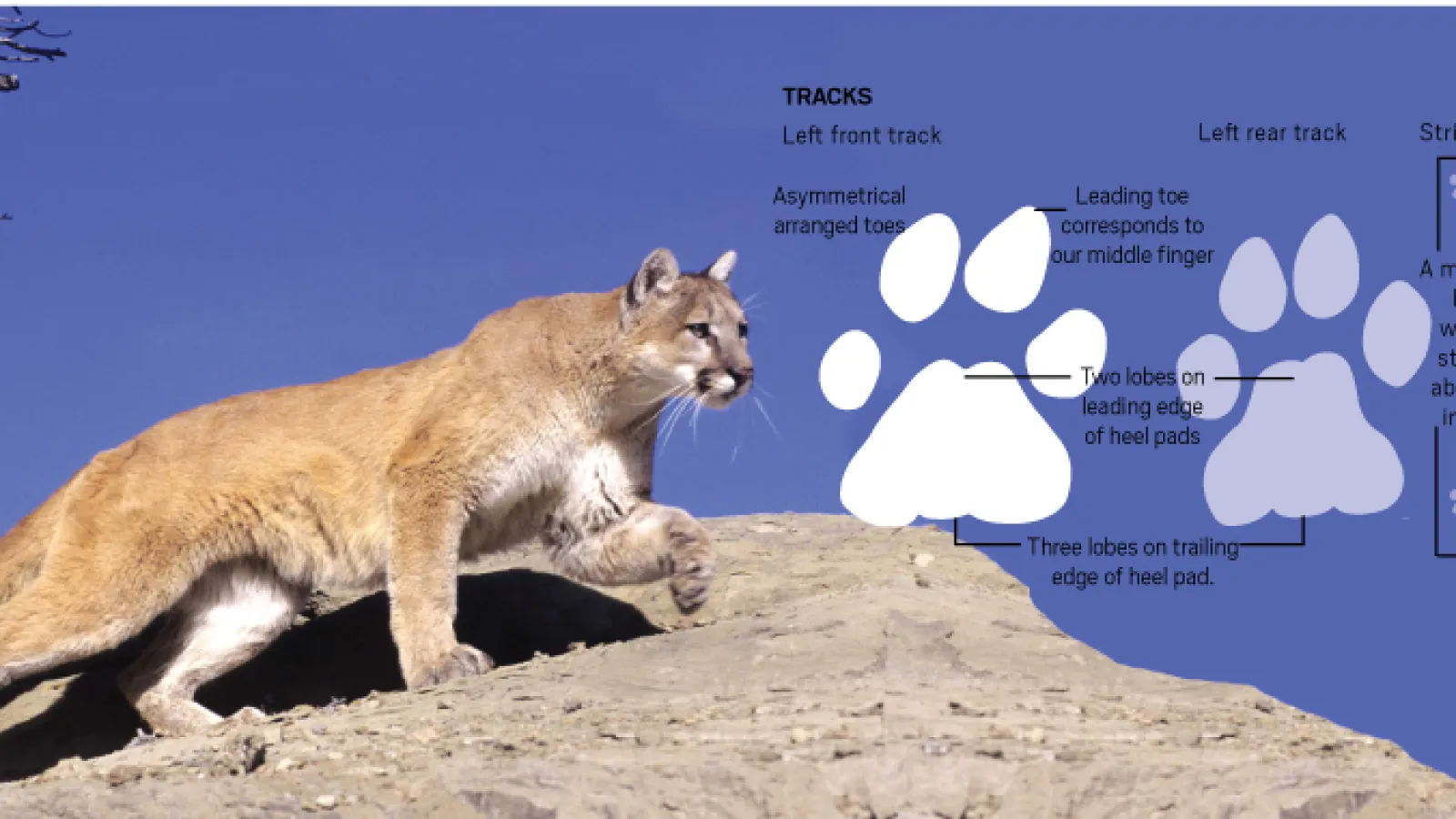
Mountain lion tracks are among the most fascinating and misunderstood signs encountered by hikers, wildlife enthusiasts, hunters, and outdoor workers. Also known as cougar tracks, these footprints offer valuable clues about the presence, movement, and behavior of one of North America’s most elusive predators. Because mountain lions are rarely seen in person, tracks often provide the only tangible evidence that these powerful animals share the landscape with humans. Learning how to identify mountain lion tracks correctly is essential not only for curiosity and wildlife study but also for safety and environmental awareness.
Understanding mountain lion tracks requires more than a glance at the ground. Many animals leave similar-looking footprints, and misidentification is common, especially when tracks are partially damaged or appear in challenging terrain. This guide examines mountain lion tracks in depth, covering their physical characteristics, track patterns, common locations, and how to distinguish them from those of other animals. By the end, readers will be equipped with practical knowledge to identify cougar footprints in the wild confidently.
What Are Mountain Lion Tracks
Mountain lion tracks are the impressions left behind by the paws of a mountain lion as it moves through its environment. These tracks form when an animal walks on soft surfaces such as dirt, mud, snow, sand, or dusty trails. Because mountain lions are solitary and wide-ranging, their tracks can appear in remote wilderness areas as well as near rural or suburban edges where human development overlaps with natural habitat.
Unlike many animals that travel in groups, mountain lions typically move alone, so their tracks appear as a single set rather than multiple overlapping prints. This solitary pattern is one of the first indicators that a track may belong to a cougar. However, identifying mountain lion tracks correctly requires careful observation of size, shape, and structure rather than relying on assumptions.
Physical Characteristics of Mountain Lion Tracks
One of the most defining features of mountain lion tracks is their overall shape. A typical mountain lion track is round or slightly oval, with four toes arranged in a semi-circular pattern around a large central heel pad. The toes are asymmetrical, meaning they are not evenly spaced or perfectly aligned, which gives the track a natural, uneven appearance.
The heel pad is one of the most crucial identification markers. In mountain lion tracks, the heel pad is wide and has a distinctive shape with three lobes at the rear edge. This feature helps distinguish cougar footprints from those of dogs or wolves, which typically have narrower heel pads and different lobe patterns. The front edge of the heel pad often appears slightly indented, creating a subtle “M”- shaped contour.
Size is another critical factor. Adult mountain lion tracks generally measure 3-4 inches wide for front paws and slightly smaller for hind paws. However, size alone should not be used as the sole means of identification, as large dogs can leave tracks of similar dimensions. Instead, size should be considered alongside shape and structure.
Claw Marks and What They Reveal
One of the most common questions about mountain lion tracks concerns claw marks. Unlike dogs and wolves, mountain lions have retractable claws, similar to domestic cats. As a result, their tracks usually do not show visible claw marks. This absence is a key clue when identifying cougar footprints.
That said, there are exceptions. In slippery conditions such as snow, mud, or steep terrain, a mountain lion may extend its claws for traction, leaving faint claw impressions. These marks are typically subtle and not consistently present across tracks. Therefore, the general rule is that mountain lion tracks lack prominent claw marks, while dog tracks almost always show them.
Mountain Lion Track Patterns and Gait
Beyond individual footprints, the pattern in which mountain lion tracks appear provides valuable information. Mountain lions are efficient movers, conserving energy as they travel long distances. When walking, they often place their hind foot directly into or very close to the print left by the front foot, a behavior known as “direct registering.” This creates a neat, linear trail that looks intentional and controlled.
The stride length of mountain lion tracks varies with speed and terrain, but walking strides typically range from 20 to 40 inches. When trotting or running, the distance between tracks increases significantly. Unlike dogs, which tend to wander side to side, mountain lions usually travel in straight lines, especially when moving through familiar territory. This straight-line movement is another helpful indicator when identifying cougar tracks.
Mountain Lion Tracks vs Dog and Wolf Tracks
Misidentification between mountain lion tracks and dog tracks is extremely common. At first glance, both may appear similar in size and shape, particularly under poor tracking conditions. However, closer inspection reveals significant differences. Dog tracks typically show clear claw marks, a more symmetrical toe arrangement, and a smaller, triangular heel pad. Dogs also tend to leave erratic trails that zigzag as they explore their surroundings.
Wolf tracks are larger than most dog tracks and may approach the size of mountain lion tracks, but they still differ in structure. Wolf tracks usually appear more elongated, with visible claws and a narrower heel pad. Additionally, wolves travel in packs, so their tracks often appear in groups rather than as a single, isolated trail.
Mountain lion tracks stand out because of their round shape, large heel pad with three rear lobes, lack of consistent claw marks, and straight, purposeful trail pattern. Considering all these factors together significantly reduces the risk of misidentification.
Mountain Lion Tracks vs Bobcat Tracks
Bobcat tracks are another common source of confusion. Bobcats are members of the same feline family as mountain lions, so their tracks share some similarities. Both typically lack claw marks and have a rounded shape with a central heel pad. The key difference lies in size.
Bobcat tracks are significantly smaller, typically measuring 1.5-2 inches in width. Mountain lion tracks, by contrast, are much larger and more robust. Additionally, bobcats tend to have shorter stride lengths and more compact movement patterns. Paying attention to scale and stride can help distinguish between these two feline tracks.
Where Mountain Lion Tracks Are Commonly Found
Mountain lion tracks can be found across a wide range of habitats, reflecting the animal’s adaptability. They are most commonly found in areas with cover, prey, and water. Forested regions, mountainous terrain, desert edges, and canyon systems are all typical locations. However, tracks may also appear near farmland, hiking trails, and suburban green spaces, especially in regions where human development overlaps with natural corridors.
Certain surfaces make tracks easier to spot. Mud, snow, and soft sand provide excellent tracking conditions, preserving details like toe shape and heel pad structure. Dry, rocky ground is less ideal, but dust or fine gravel can still capture partial impressions. Seasonal conditions also play a role, with snow often revealing long, uninterrupted trackways during winter months.
Identifying Fresh vs Old Mountain Lion Tracks
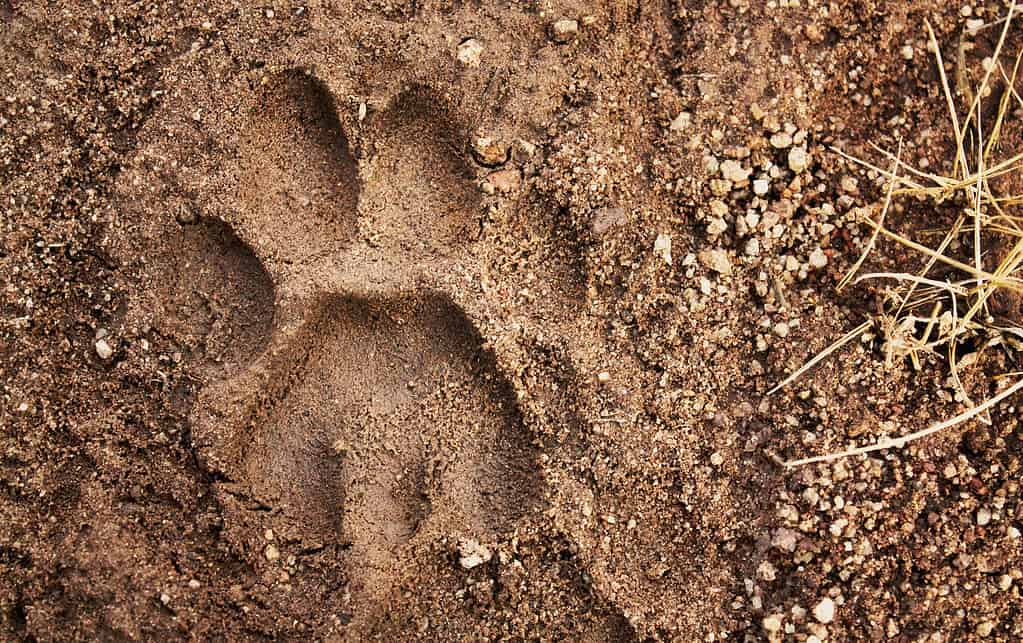
Determining whether mountain lion tracks are fresh or old can provide insight into how recently the animal passed through an area. Fresh tracks usually have sharp, well-defined edges and precise details. In snow, fresh tracks appear crisp and may show fine texture from the paw pad. In mud, they may still look moist or glossy.
Older tracks tend to lose detail as wind, rain, sunlight, and other animals degrade the impression. Edges become rounded, debris may accumulate within the print, and overall clarity declines. While older tracks still confirm the presence of mountain lions in the area, fresh tracks suggest more recent activity and warrant increased awareness.
What Mountain Lion Tracks Reveal About Behavior
Mountain lion tracks are more than just footprints; they are a window into the animal’s behavior. Track direction, spacing, and location can indicate whether the cougar was traveling, hunting, or patrolling its territory. Tracks following ridgelines, game trails, or creek beds often indicate travel routes, while tracks that circle or converge may suggest hunting behavior.
Large scrapes, disturbed vegetation, or partially covered tracks can also accompany mountain lion trails. These signs may indicate territorial marking or attempts to conceal movement. Observing these details helps build a more complete picture of how mountain lions interact with their environment.
Safety Considerations When Finding Mountain Lion Tracks
Encountering mountain lion tracks does not necessarily indicate danger, but it should prompt caution. Mountain lions are generally elusive and avoid humans, yet they are powerful predators capable of defending their territory or young if threatened. If tracks appear fresh, it is wise to remain alert, avoid traveling alone, and make noise to announce your presence.
Backing away calmly, avoiding running, and maintaining situational awareness are sensible precautions. Reporting track sightings to local wildlife authorities can also contribute to monitoring efforts and public safety awareness.
Conclusion
Mountain lion tracks offer a fascinating glimpse into the hidden world of one of North America’s most iconic predators. By learning to identify cougar footprints accurately, individuals gain not only practical skills but also a deeper appreciation of wildlife and ecosystem balance. Recognizing the shape, size, heel pad structure, absence of consistent claw marks, and trail patterns associated with mountain lion tracks enables confident identification in the wild.
Whether you are a hiker, outdoor worker, or wildlife enthusiast, understanding mountain lion tracks enhances both safety and respect for the natural world. These silent impressions remind us that even when unseen, mountain lions continue to move quietly through the landscapes we share.
READ MORE: selftimes
