


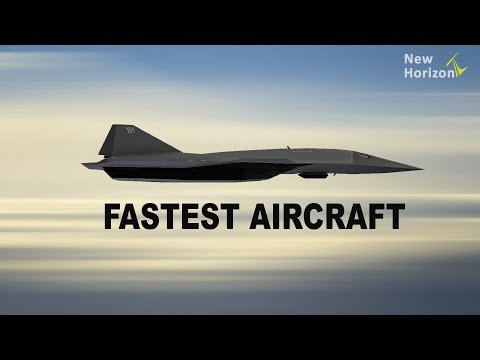
The idea of an aircraft that can fly faster than a missile, cross continents in minutes, and remain almost impossible to intercept sounds like science fiction. Yet this is precisely what Lockheed Martin SR-72 represents. Often referred to as the “Son of Blackbird,” this aircraft is designed to push the limits of speed, engineering, and modern warfare. While many details remain classified or closely guarded, sufficient information has emerged to indicate that this project is among the most ambitious aviation programs of the 21st century. It is not just another military plane. It is a vision of how airpower may look in the coming decades, built on hypersonic speed, advanced materials, and cutting-edge propulsion technology.
The origin of the SR-72 concept
To understand the importance of this aircraft, it helps to look back at its legendary predecessor, the SR-71 Blackbird. Developed during the Cold War, the SR-71 could fly above Mach 3 and at altitudes beyond the reach of most air defense systems. It was never shot down in combat, mainly because nothing could catch it. Decades later, military planners and engineers began asking a simple question: what if we could build something even faster? That question eventually led to the concept behind Lockheed Martin SR-72, developed by Lockheed Martin’s famous Skunk Works division, known for producing revolutionary aircraft designs under extreme secrecy.
The goal was not only to create a successor to the SR-71 but to redefine what is possible in aerial reconnaissance and strike missions. Instead of Mach 3, engineers aimed for Mach 6, approximately six times the speed of sound. At that speed, an aircraft could travel from New York to London in under an hour. For military operations, this entails rapid intelligence gathering, near-instant response times, and a platform capable of outrunning most existing threats.
Hypersonic speed and what it really means
Hypersonic flight is typically defined as speeds above Mach 5. At these velocities, air behaves differently around the aircraft. Temperatures soar, materials expand, and traditional engine designs struggle to function. The ambition of Lockheed Martin SR-72 lies not only in reaching Mach 6 but in doing so reliably, repeatedly, and in real operational conditions.
At such speeds, friction with the air can heat the aircraft’s surface to hundreds or even thousands of degrees Celsius. This creates enormous engineering challenges. Metals can weaken, electronic components can fail, and even the aircraft’s shape can change slightly due to thermal expansion. Designing a vehicle that can withstand these conditions while remaining stable and controllable is one of the most challenging tasks in aerospace engineering.
Hypersonic speed also changes the strategic landscape. An aircraft traveling at this speed significantly reduces the time an enemy has to detect, track, and respond. Air defense systems that rely on predicting flight paths become far less effective. This makes the aircraft not only fast but also tactically unpredictable.
Revolutionary propulsion technology
One of the most fascinating aspects of the program is its engine concept. Standard jet engines struggle to function properly once speeds reach the hypersonic range.
Rockets can, but they are impractical for long-range atmospheric flight. The solution proposed for the Lockheed Martin SR-72 is a turbine-based combined-cycle engine, often referred to as TBCC.
This system works in stages. During takeoff and lower-speed flight, the aircraft would use a conventional turbine engine similar to those found on high-performance jets. As speed increases, the system transitions to a ramjet or scramjet mode, which uses the aircraft’s forward motion to compress incoming air for combustion. This enables the aircraft to continue accelerating well beyond the limits of conventional jet engines.
The challenge is not just creating this engine but making the transition between modes smooth and reliable. Engineers must manage airflow, fuel injection, temperature control, and structural stress simultaneously. If successful, this propulsion system alone would constitute a significant technological breakthrough, even beyond military applications.
Aircraft design and advanced materials
The design of Lockheed Martin SR-72 is shaped entirely by its mission and speed. While official images are limited, concept art suggests a sleek, angular form optimized for low drag and high thermal resistance. Every curve and surface would be carefully engineered to manage airflow at hypersonic velocities.
Materials play a critical role. Traditional aluminum alloys used in commercial aircraft would not survive these temperatures. Instead, engineers rely on advanced composites, titanium alloys, and possibly ceramic-based materials that can handle extreme heat without losing strength. Some parts of the aircraft may use actively cooled structures, in which fuel or specialized fluids absorb heat before it damages critical components.
Stealth is another critical consideration. Although speed is the primary defense, reducing radar visibility provides an additional layer of protection. Sharp angles, specialized coatings, and internal weapon bays all contribute to the aircraft’s difficulty of detection, tracking, and targeting.
Mission roles and operational capabilities
The primary mission of Lockheed Martin SR-72 is expected to be intelligence, surveillance, and reconnaissance. In simple terms, it would be able to fly over or near hostile territory, gather detailed data, and return before enemy forces even realize what happened. This is especially valuable in regions with limited or unpredictable satellite coverage.
Another potential role is precision strike. With hypersonic speed, the aircraft could deliver weapons to high-value targets with unprecedented speed. This capability could be used to neutralize threats such as mobile missile launchers, command centers, or other time-sensitive targets. The idea is not to replace existing bombers or drones, but to complement them by providing an option when speed and surprise are critical.
There is also speculation that the aircraft could serve as a launch platform for hypersonic missiles or uncrewed vehicles, thereby extending its reach. While official details remain scarce, the flexibility of such a platform would make it one of the most versatile assets in any modern air force.
Strategic importance in modern warfare
In today’s military environment, speed is more than a luxury. It is a strategic necessity. Conflicts evolve rapidly, and the ability to gather information and respond quickly can determine the outcome of entire campaigns. Lockheed Martin SR-72 fits directly into this reality.
By drastically reducing response times, it changes how military planners think about distance and geography. A crisis on the other side of the world could be monitored or addressed within hours instead of days. This compresses decision-making timelines and forces adversaries to operate under constant uncertainty.
It also serves as a powerful deterrent. Knowing that an opponent can observe or strike almost anywhere at any time complicates strategic planning and increases the perceived cost of aggressive actions. In this sense, the aircraft is not just a tool of war but also a tool of prevention.
Development status and realistic timelines
Lockheed Martin has publicly acknowledged the program’s existence, but much remains classified. Over the years, company representatives have suggested that a demonstrator aircraft could fly sometime in the 2020s, though exact dates are rarely confirmed. Developing such a complex system takes time, funding, and extensive testing.
Engine testing, material research, and computational simulations are believed to be ongoing. Unlike earlier eras, modern aircraft development relies heavily on digital modeling, which allows engineers to test thousands of design variations before building physical prototypes. Even so, real-world testing is unavoidable, especially for something as extreme as hypersonic flight.
Early versions of the aircraft may be unmanned, reducing risk and allowing engineers to focus on performance before adding human pilots. This approach has become common in advanced aerospace projects.
Challenges that cannot be ignored
Despite its promise, Lockheed Martin SR-72 faces enormous challenges. Cost is a significant factor. Developing, building, and maintaining hypersonic aircraft is far more expensive than creating, building, and maintaining conventional platforms. Governments must decide whether the strategic advantages justify the investment.
Technical risks are also significant. Even minor design flaws can become catastrophic at Mach 6. Cooling systems must work perfectly. Structural integrity must be maintained under extreme stress. Software must manage complex transitions between engine modes and flight regimes without error.
There are also political and ethical considerations. Hypersonic technology can blur the line between conventional and strategic weapons, potentially increasing tensions between major powers. As more countries invest in similar systems, there is a risk of a new kind of arms race focused on speed rather than sheer firepower.
The future beyond the SR-72
Whether or not the aircraft enters full operational service in its originally envisioned form, its impact on aerospace technology is already significant. Research conducted for Lockheed Martin SR-72 contributes to advances in materials science, propulsion, thermal management, and aerodynamics. These innovations can influence everything from civilian spaceflight to high-speed transportation systems.
Some experts even envision a future in which hypersonic passenger travel becomes possible, drastically reducing global travel times. While that remains far off, the technologies developed today lay the foundation for such possibilities.
In the military domain, aircraft represent a shift toward platforms that prioritize speed and information dominance over sheer numbers. It embodies a philosophy that controlling the skies is not just about having more aircraft, but about having smarter and faster ones.
Conclusion
The story of Lockheed Martin SR-72 is one of ambition, innovation, and the relentless human desire to push beyond known limits. It builds on the legacy of the SR-71 Blackbird while aiming to redefine what an aircraft can achieve in the modern world. From its hypersonic speed and revolutionary engines to its strategic importance and technological challenges, the program stands as a symbol of the extent to which aerospace engineering has advanced.
Even if many details remain classified, the concept alone has already reshaped discussions of airpower and global security. Whether it becomes a common sight in military operations or remains a specialized asset used only in critical moments, its influence will be felt for decades. In the realm of advanced aviation, it is not just another aircraft. It is a glimpse into the future of flight itself.
READ MORE: selftimes
