


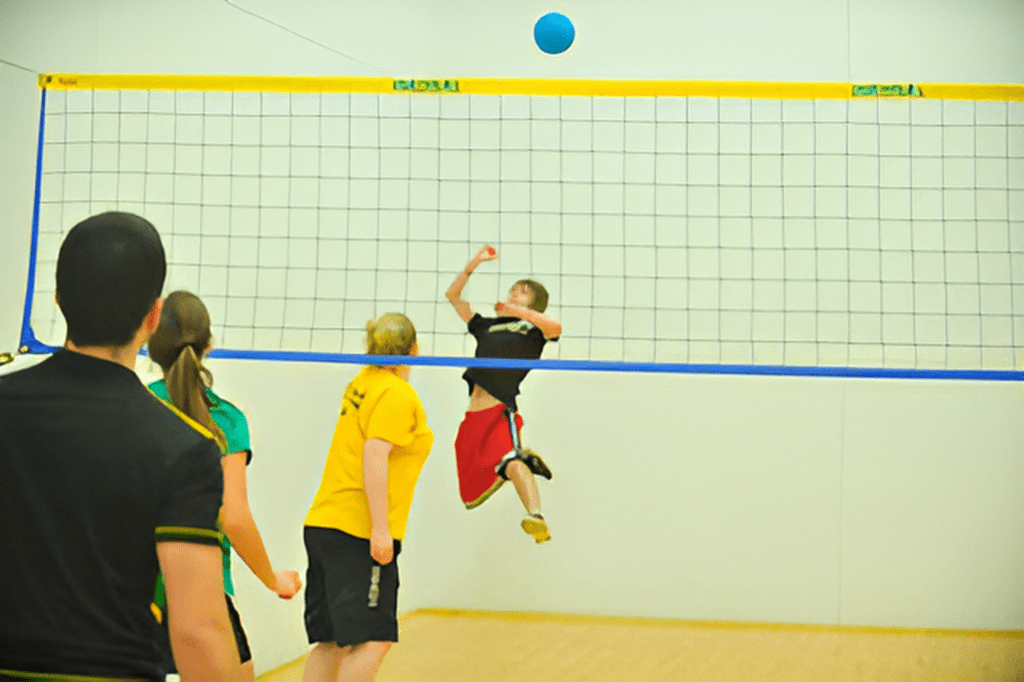
Wallyball is a fast-paced indoor court sport that looks like volleyball at first glance, but plays very differently once the rally begins. It is played inside a racquetball-style court with a net stretched across the middle, and the biggest twist is that players are allowed to use the walls during play. That one rule changes everything. Instead of the ball going out of bounds when it hits a wall, it can bounce and stay live, which creates longer rallies, sharper angles, and surprise returns. Players must react quickly, adjust their positioning, and think ahead because rebounds can come from unexpected directions. The closed court also makes the game feel more intense and energetic, since the ball rarely travels far and stays in play almost every second of a rally.
How Wallyball Started and Grew
The sport began when players experimented with playing volleyball inside racquetball courts to avoid weather problems and to make games more exciting in small spaces. Over time, rules were shaped to make wall contact legal and structured. Recreation centers and fitness clubs began adding wallyball setups because they required little additional equipment beyond a net and an appropriate ball. Its growth has mostly come through local leagues, gyms, and community tournaments rather than large pro circuits. That grassroots style is part of its charm. People often discover it by accident, try one match, and then keep coming back because the pace and unpredictability make every game feel fresh.
Court Setup and Equipment Basics
A standard wallyball match takes place inside a racquetball court, which is smaller than a volleyball court and fully enclosed with four walls and a ceiling. A net is placed across the center at a height similar to volleyball, though some leagues adjust it slightly for coed or recreational play. The ball is usually similar to a volleyball but may be slightly softer, depending on league preference, to improve control in tight spaces. Players wear court shoes with a good grip since movement is quick and directional changes happen often. No heavy gear is required, which makes entry into the sport easy for beginners. Because the space is enclosed, lighting and wall-surface conditions matter more than in open-court sports.
Core Rules That Shape the Game
The rules of wallyball share a foundation with volleyball but include special allowances for wall play. Teams are often made up of two to four players per side, depending on league format. Each rally begins with a serve, and teams are allowed a set number of touches before sending the ball over the net. The key difference is that the ball can strike one or more walls during a rally and remain in play, as long as it does not hit the floor before being returned. Players can even use wall rebounds as part ofan intentional strategy. Scoring systems vary: some games use rally scoring, while others use side-out scoring. Rotations and service orders are usually enforced to keep play fair and balanced.
How Wall Rebounds Change Strategy
The wall is not just a boundary in wallyball. It is a tool. Smart players learn to angle shots so the ball rebounds off the side or back wall and drops into hard-to-reach spots. Defensive players must learn to read these angles and move early rather than react late. A powerful spike that would end a rally in volleyball might come flying back off the wall in this game, forcing another touch. Teams often practice bank shots and rebound control to keep rallies alive. Communication becomes more important because rebounds can suddenly shift the ball’s path. The best teams treat the walls like extra teammates, using them to create better setups and safer returns.
Skills That Matter Most for Players
Quick reflexes are one of the biggest advantages a player can have in wallyball. The shorter court means the ball reaches you faster, so reaction time and ready posture are critical. Ball control is another key skill because wild hits often turn into easy rebound chances for the other team. Soft hands on passes and sets help keep the ball predictable even after wall contact. Footwork also matters a lot. Small adjustment steps and balanced positioning allow players to respond to strange bounce patterns. Strong communication skills help teams avoid collisions and confusion in tight spaces. Players who talk, call shots, and signal intentions usually perform better as a group.
How Wallyball Compares to Volleyball
While both sports share serving, setting, and attacking concepts, the experience feels very different. Volleyball is more open and depends heavily on vertical play and long court coverage. Wallyball is tighter, faster, and more reactive. The presence of walls reduces the number of dead balls and increases rally length. Shot selection changes, too. In volleyball, you often aim away from defenders into open floor, but in wallyball, you might aim at a wall to create a tricky rebound. Jump height still helps, but anticipation and positioning often matter more than raw reach. Players from volleyball backgrounds usually adapt quickly, but must unlearn the habit of stopping when the ball hits the boundary.
Fitness and Social Benefits of Playing
Wallyball delivers a strong workout without feeling like formal training. The constant movement improves cardio endurance and agility. Short bursts of jumping and lateral movement build leg strength and coordination. Because teams are small, every player stays involved and active. The indoor setting also makes it reliable year-round, regardless of the weather. Socially, the sport is very approachable. New players can join mixed skill groups and still contribute after a short learning period. Many clubs organize friendly leagues that focus on fun competition rather than strict performance, keeping the environment welcoming.
Getting Started as a Beginner
Starting with wallyball is easier than many court sports because the equipment needs are simple and the rules are familiar to anyone who has seen volleyball. Look for recreation centers or fitness clubs with racquetball courts and ask whether they host games. Beginners should first practice controlled passing and simple wall rebounds to get comfortable with bounce behavior. Playing a few casual matches helps build instinct quickly. It also helps to watch how experienced players position themselves during rebounds and how they choose angles instead of just power. With a few play sessions, most newcomers gain confidence and start enjoying the creative side of the game.
Why the Game Keeps Players Hooked
The reason wallyball keeps people coming back is the mix of speed, strategy, and surprise. No two rallies look the same because wall angles and player choices create endless variation. The game rewards smart thinking as much as athletic ability, which keeps it competitive across age groups and skill levels. It is easy to learn, challenging to master, and always active. For anyone who enjoys court sports and quick teamwork, it offers a lively alternative that never feels dull.
READ MORE: selftimes
