


Three years ago, I pressure-washed the patio, pulled up everything that wasn’t where I’d put it, and declared the garden finished. Symmetrical box hedging, weed-free gravel, a lawn with edges sharp enough to satisfy a geometry teacher. It looked, I told myself, immaculate.
Within a fortnight, I was bored with it. Within a month, I’d noticed something else: it was completely, eerily silent.
No bees working the borders. No butterflies drifting between the lavender and the verbena. No hedgehog shuffling through at dusk. The birds still came for the feeder, but only briefly — there was nothing much for them here, in this neat, controlled space where everything had been tidied, treated, or concreted over. I’d made a garden that looked good in photographs and provided almost nothing to anything that actually wanted to live in it.
What followed was one of the more humbling experiences of my gardening life: learning how to let go.
The Myth of the Perfect Garden
We’ve been sold a particular idea of what a garden should look like. Weed-free. Uniform. Colourful in a coordinated way. Lawns without daisies. Borders without gaps. Everything in its place, nothing left to chance.
It’s an idea reinforced by gardening television, by show gardens at Chelsea, by the neighbourhood arms race of front garden one-upmanship that quietly governs suburban streets up and down the country.
And it’s an idea that, increasingly, ecologists and garden designers alike are pushing back against quite forcefully.
The truth is that the “perfect” garden — immaculate, manicured, chemically maintained — is often an ecological desert. A lawn treated with weedkiller and fed with synthetic fertiliser might look lush from a distance, but it supports almost no insect life. Borders planted exclusively with showy hybrid varieties bred for large flowers often have reduced or modified pollen, offering very little to pollinators. Bare soil between plants is endlessly hoed and disturbed, preventing the ground beetles and other beneficial invertebrates that help control pests from establishing themselves.
None of this means your garden has to look untidy. That shift in perspective is what completely transformed the way I saw it. A wildlife-friendly garden doesn’t mean giving up and letting nature run riot. It means making smarter, more considered choices — and ending up with something far more interesting to look at than a sterile showpiece.
What Wildlife Actually Needs
Before you can make your garden more welcoming to wildlife, it helps to understand what wildlife is actually looking for. It comes down to three things, more or less: food, water, and shelter.
Food takes many forms. Nectar and pollen for bees, hoverflies, butterflies, and moths. Seeds and berries for birds. Insects and grubs for hedgehogs, thrushes, and robins. Aphids — yes, really — for blue tits and ladybirds. A garden that supports a diverse food web is full of life at every level, and that means tolerating a certain amount of what gardeners traditionally call “pests” in the understanding that they support predators that keep the whole system in balance.
Water is shockingly underrepresented in most suburban gardens. A pond — even a small one — is probably the single most impactful thing you can add to a garden for wildlife. Studies from the Royal Horticultural Society have found that garden ponds support a wider range of species than almost any other garden habitat. Even a half-barrel water feature or a shallow dish kept topped up provides a drinking and bathing resource for birds and insects that may have no other water source nearby.
Shelter means somewhere to hide, to nest, to overwinter, and to raise young. Dense shrubs, log piles, leaf litter, long grass, gaps under fences for hedgehogs, bat boxes under the eaves, bee hotels in a sunny south-facing position — all of these create the microhabitats that make the difference between a garden that wildlife visits and one where wildlife lives.
The Changes I Made (And What Happened Next)
I didn’t overhaul everything at once. That’s worth saying, because there’s a temptation when you become enthusiastic about something to throw yourself at it completely and do too much too quickly. I made changes gradually, over two seasons, and observed what happened.
The first thing I did was stop cutting the lawn every week and let a patch at the bottom of the garden grow long. I felt vaguely embarrassed about this for approximately two weeks before it started to look genuinely beautiful — the grass developing a soft, meadow-like quality, scattered with self-seeded herb robert and red clover that had presumably been there all along, suppressed by regular mowing. By midsummer, there were grasshoppers in it, which I hadn’t seen in a suburban garden before. The following year, there were common spotted orchids, which stopped me completely in my tracks on an otherwise unremarkable Tuesday morning.
The second change was removing the weed membrane and gravel from a border and replanting it with single-flowered perennials: Echinacea, Verbena bonariensis, Agastache, Nepeta, Rudbeckia, Scabiosa. The difference in insect activity within a single season was remarkable. On a warm August afternoon, that border was genuinely humming — bumblebees working every flower head, hoverflies hovering in the warm air, a comma butterfly that sat in the same spot for twenty minutes as if it had found somewhere it quite liked.
The third thing — and this took the most discipline — was leaving the borders uncut until February. Every instinct said tidy up in autumn, cut everything back, make it neat. What I had instead was four months of structural seedheads catching the frost, providing food for finches and other seed-eating birds, and offering overwintering sites for insects in hollow stems. It looked, unexpectedly, rather wonderful.
Plants That Pull Their Weight for Wildlife
Not all plants are equal from a wildlife perspective, and a few changes to your planting palette can make an enormous difference without compromising on beauty.
Verbena bonariensis is close to the perfect wildlife plant: tall, airy, long-flowering, loved by every pollinator going, and it self-seeds freely without becoming a nuisance. It’s also graceful, fitting almost any garden style.
Echinacea (coneflowers) flowers for months, attracts a staggering range of pollinators, and when left standing through autumn, produces seedheads that goldfinches find irresistible. The species form — Echinacea purpurea — is more wildlife-friendly than many highly-bred cultivars.
Native hedgerow plants earn their place in any larger garden. Hawthorn, blackthorn, elder, and dog rose provide nesting sites, berries for birds, and flowers for early pollinators in a way that no ornamental shrub can quite match. A mixed native hedge is also, incidentally, far more interesting to look at across the seasons than a row of Leylandii.
Single-flowered roses — the wild species roses and their close relatives — are infinitely more useful to wildlife than the elaborate doubles bred for fragrance and visual impact. Rosa glauca is a particular favourite: beautiful glaucous foliage, simple pink flowers in June, and abundant hips that persist through winter, providing food for birds long after everything else has finished.
Ivy deserves a vigorous public rehabilitation. Widely considered a weed or a destroyer of walls (it isn’t, if the mortar is sound), ivy is in fact one of the most wildlife-valuable plants you can have in a garden. It flowers in October and November when almost nothing else does, providing a critical late-season nectar source. Its berries ripen in late winter, providing food when food is scarcest. Its dense growth provides nesting sites and shelter for dozens of species. Leave the ivy.
Where to Start: Practical First Steps
If all of this feels ambitious, start with just one or two things and see what happens. The most impactful immediate changes you can make are:
Add water. A washing-up bowl sunk into the ground with a ramp of stones for creatures to climb in and out is a pond in the eyes of a palmate newt. You don’t need planning permission, a landscaper, or a particularly large budget. You need a container, some water, and a stone or two. Do it this weekend.
Stop using pesticides and herbicides. This one’s non-negotiable if you’re serious about wildlife. The invertebrate food chain — the base on which every bird, hedgehog, and bat in your garden depends — is acutely sensitive to chemical intervention. A garden treated with insecticides is a garden that’s actively working against you. The “pests” you’re killing are also the food source for everything else you’re trying to attract.
Let something go a bit wild. It doesn’t have to be much—a corner, a strip, a pot left to self-seed. Permit something just to be.
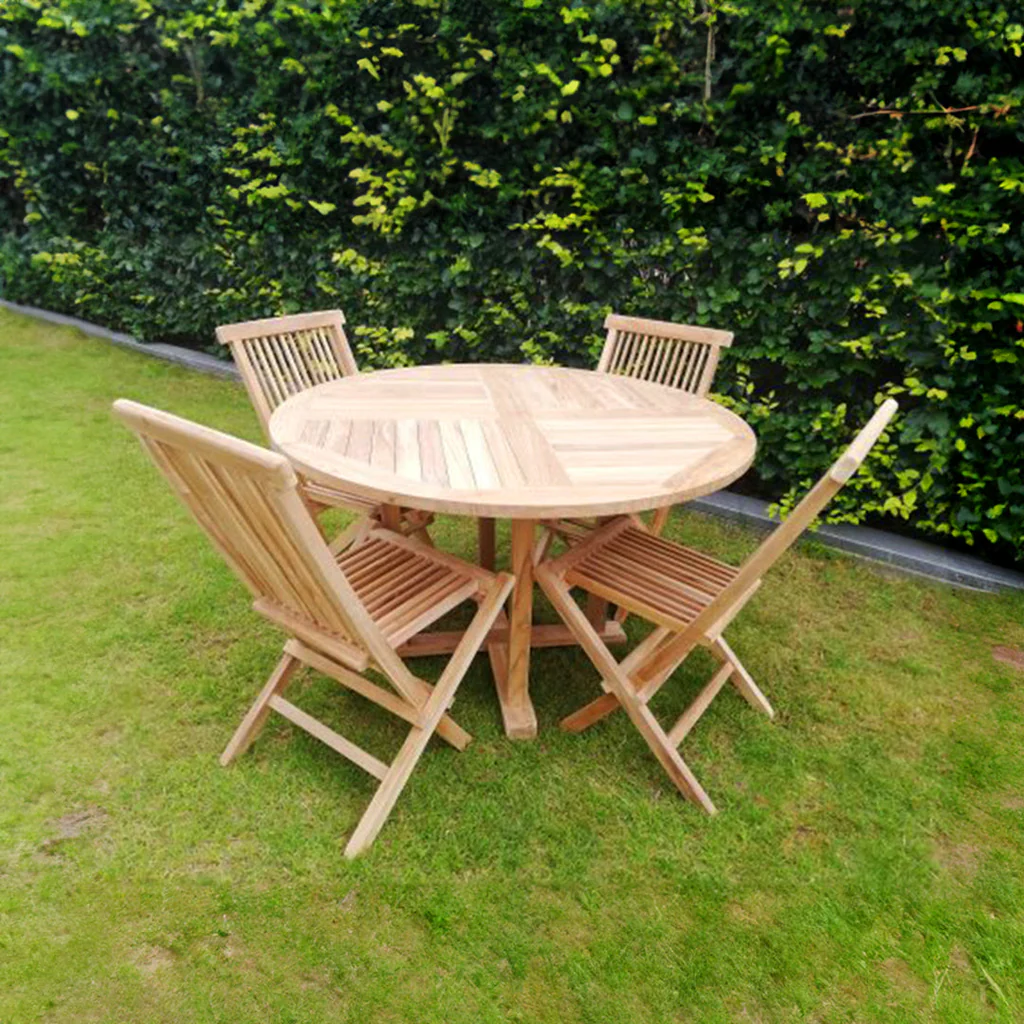
Because the whole point of a wildlife-friendly garden is to spend more time in it, it’s worth investing in furniture that makes that easy. Dobbies Garden Centres carry a well-chosen range of garden furniture — and as one of the UK’s most trusted garden retailers, they’re a reliable first stop whether you’re after a simple bistro set for a quiet corner or a full dining set for the patio.
The Unexpected Reward
Here’s what I didn’t anticipate when I started making my garden more wildlife-friendly: how much more I would enjoy spending time in it. The immaculate version was something to look at, occasionally. The living, imperfect, slightly louder version is somewhere I actually want to be. There is something quietly extraordinary about sitting in a garden where things are happening — where you can watch a bumblebee methodically work its way through a clump of Agastache, or catch a robin hunting in the freshly-turned soil of a bed, or spot a slow worm under the log pile you put in almost as an afterthought.
A garden that supports life is, it turns out, a far more interesting place to spend time than one that merely looks as though it should.
The pressure washer is still in the shed. It hasn’t come out in three years.
READ MORE: selftimes
