


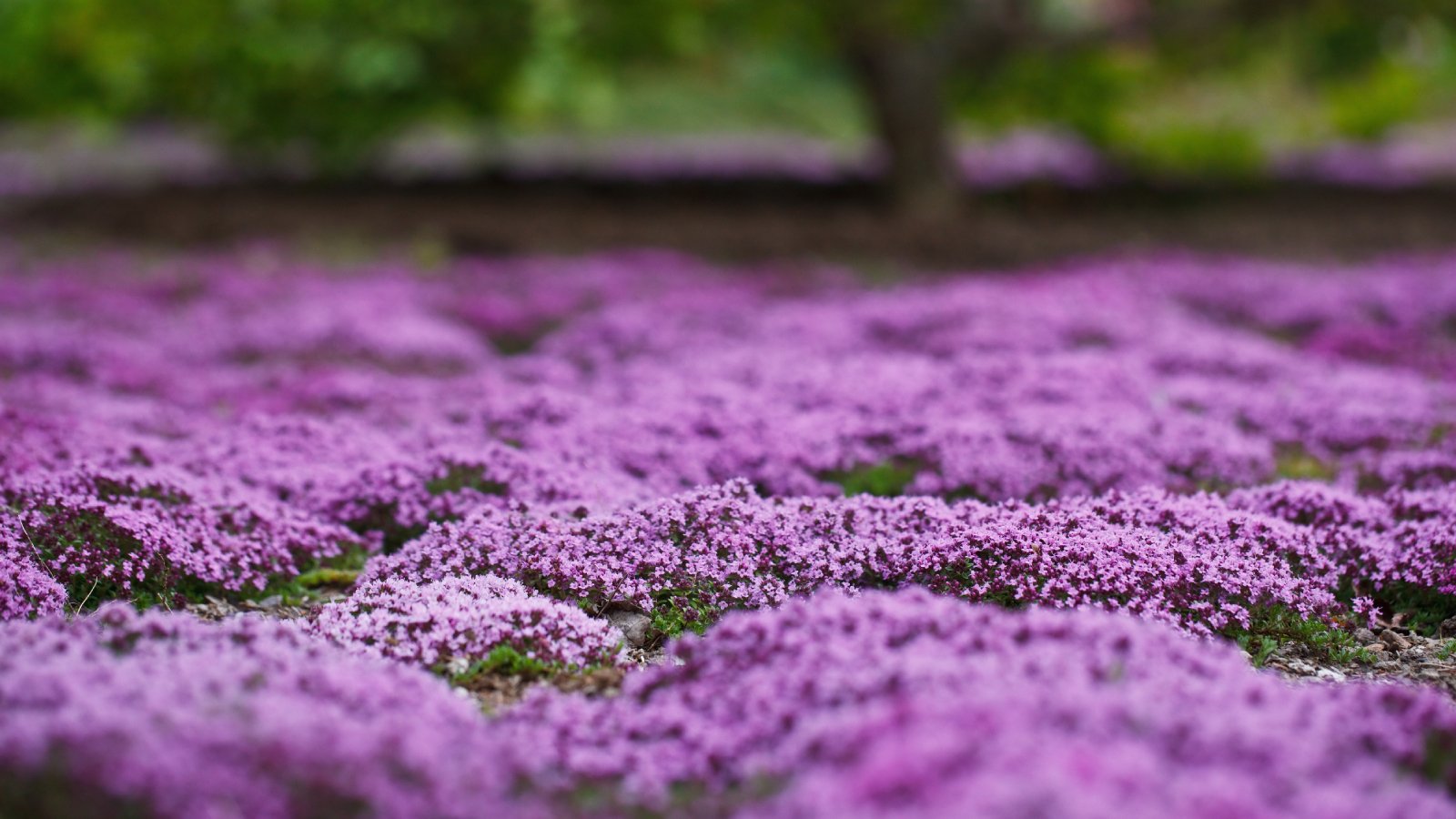
The thyme plant has been valued for centuries for its fragrance, culinary uses, and ability to thrive in diverse environments. Whether you’re a gardener, a cook, or simply someone looking to add low-maintenance greenery to your outdoor space, thyme offers a remarkable blend of beauty, hardiness, and practicality. Today, the most popular varieties include creeping thyme, fresh thyme used in cooking, red creeping thyme known for its striking color, and wild mountain thyme celebrated for its aroma and natural resilience. Each of these types brings its own charm and benefits, and understanding them helps gardeners make the most informed planting decisions. As a perennial herb that thrives in well-drained soil and abundant sunlight, thyme is a long-lasting addition to any outdoor space, adding color, texture, and fragrance across multiple seasons.
What Makes Creeping Thyme Unique
Creeping thyme stands out as a low-growing, spreading variety that forms a dense mat across the ground. Unlike upright thyme, which grows in small, bushy clusters, creeping thyme spreads outward, making it ideal for filling empty spaces, covering soil, and providing an alternative to traditional grass. Gardeners often choose creeping thyme for its ability to withstand foot traffic and return each year with minimal maintenance. Its close-to-the-ground structure helps suppress weeds, retain soil moisture, and prevent erosion, making it far more than a decorative plant. The scent released when stepping on creeping thyme adds another layer of sensory appeal, transforming pathways, patios, and walkways into pleasantly fragrant spaces. This variety is drought-tolerant, thrives in rocky or sandy soil, and grows well even in conditions that many other garden plants struggle with, making it an excellent choice for low-water landscapes.
Understanding Red Creeping Thyme and Its Colorful Appeal
Red creeping thyme offers all the benefits of traditional creeping thyme, but adds a burst of color, making it a favorite for ornamental landscaping. Known for its vibrant reddish-pink flowers, this variety spreads across the ground just like its green counterpart, but creates a visually striking carpet when in bloom. Red creeping thyme enhances borders, rock gardens, and pathways while attracting bees and other beneficial pollinators throughout the warm months. Its colorful blossoms provide contrast against stones, stepping paths, or green foliage, giving garden designers a flexible and attractive option for both large and small spaces. Despite its delicate appearance, red creeping thyme remains extremely hardy, resisting drought, heat, and even light foot traffic with ease. Whether used as a solo plant or mixed with other thyme varieties, it brings energy and elegance to any outdoor layout.
Wild Mountain Thyme: A Rugged and Aromatic Variety
Wild mountain thyme, often found growing naturally in high-altitude regions, is one of the most aromatic and resilient forms of thyme. This variety thrives in rocky, harsh environments where many plants fail, yet it still produces clusters of small purple flowers and a strong herbal fragrance. It is prized for its rich aroma that intensifies when the leaves are crushed, making it a sought-after culinary and aromatic herb. Gardeners value wild mountain thyme for its ability to survive with minimal care while adding texture and depth to garden landscapes. This variety is especially popular in naturalistic or rustic garden designs, where its ability to blend into rocks, slopes, and uneven terrain offers both beauty and practicality. Because wild mountain thyme is used in various herbal traditions and natural wellness practices, it remains one of the most recognizable thyme plants worldwide.
Fresh Thyme and Its Everyday Culinary Importance
Fresh thyme is the form most people recognize in cooking. Its small leaves hold a powerful fragrance that adds depth and complexity to dishes across many cuisines. Whether used with vegetables, poultry, soups, roasted foods, or slow-cooked recipes, fresh thyme enhances flavor without overpowering other ingredients. Home cooks value its versatility, ease of use, and ability to stay fresh for several days when stored properly. Growing your own thyme plant also makes it easier to harvest fresh sprigs whenever you need them, ensuring a constant supply of high-quality herbs. Fresh thyme offers subtle medicinal and nutritional benefits, including digestive support, antioxidant properties, and general wellness. When cultivated in your garden, it becomes both a practical and enjoyable part of your home-cooking routine.
How to Grow Creeping Thyme Successfully
Growing creeping thyme begins with choosing the correct location. This plant needs full sun—at least six hours daily—to thrive and maintain its dense, lush appearance. It prefers well-drained soil, so gardeners often mix sand or small gravel into the planting area to improve drainage. Creeping thyme should be planted in early spring once frost passes or in early fall when temperatures are mild. Spacing plants about 12 to 18 inches apart allows them to spread without overcrowding. Water deeply right after planting, but avoid overwatering afterward; creeping thyme thrives on minimal moisture and can suffer in soggy conditions. Once established, it requires almost no care beyond occasional trimming to maintain shape or encourage thicker growth. Because the plant is naturally pest-resistant, chemical treatments are rarely needed, contributing to its appeal as a low-maintenance herb.
Planting and Caring for Red Creeping Thyme
Red creeping thyme requires similar growing conditions but benefits from slightly more attention when establishing its root system. Keep the soil lightly moist during the first few weeks after planting to promote healthy root development. Once rooted, red creeping thyme becomes incredibly resilient, needing only periodic watering during severe drought. Pruning after flowering helps the plant maintain its thick, colorful spread while encouraging new blooms the following season. This variety grows best in wide-open spaces with direct sunlight, allowing its flowers to develop and display their vibrant color fully. Because red creeping thyme grows low and spreads outward, it works exceptionally well between stepping stones, along borders, and in rock gardens, where its blossoms can create a vivid, flowing landscape.
Landscaping Ideas With Creeping Thyme and Other Varieties
One of the most significant advantages of creeping thyme is its versatility in landscaping. Many gardeners use creeping thyme as a ground cover in place of traditional grass, especially in areas where mowing is difficult or water usage needs to be reduced. Its ability to handle light foot traffic makes it perfect for walkways, garden paths, and around patios. When planted between stepping stones, the plant releases a pleasant scent whenever someone steps on it. Red creeping thyme adds color variation, offering an attractive option for creating patterned or multicolored ground cover designs. Wild mountain thyme fits beautifully into natural or rustic landscaping, especially on slopes, rock edges, or uneven terrain. Mixing these varieties allows gardeners to achieve a layered look, blending different shades of green, red, and purple throughout the garden while also supporting pollinators like bees and butterflies.
Harvesting and Maintaining Healthy Thyme Plants
Harvesting thyme is simple: gently snip the stems when the plant is dry, and the leaves are fragrant. Regular harvesting encourages bushier growth and prevents the plant from becoming woody. The best time to harvest is in late morning, once the dew has evaporated. For creeping thyme varieties, harvest lightly to avoid removing too much coverage at once, while fresh thyme used for cooking can be harvested more frequently. To maintain long-term health, remove any dead or damaged stems during seasonal cleanup. Over time, thyme plants can become woody in the center; trimming them in early spring promotes new growth and a fuller appearance. Because thyme is drought-tolerant and naturally pest-resistant, it remains one of the easiest herbs to maintain year after year without requiring chemicals or frequent watering.
Final Thoughts on Choosing the Right Thyme Variety
Whether you’re drawn to the fragrance of fresh thyme, the vibrant blossoms of red creeping thyme, the rugged charm of wild mountain thyme, or the practical ground cover benefits of creeping thyme, every thyme plant adds value to your garden in a unique way. These resilient herbs enhance landscapes, improve soil coverage, attract pollinators, and provide fresh flavor for cooking. Their ability to thrive with minimal water and care makes them ideal for gardeners seeking beauty without high maintenance. From rock gardens to pathways, from herb gardens to open landscapes, thyme varieties bring color, aroma, and versatility to any outdoor space. By selecting the right thyme type for your needs and following simple growing and care techniques, you can enjoy a thriving, fragrant garden filled with these remarkable aromatic plants for years to come.
READ MORE: selftimes
