


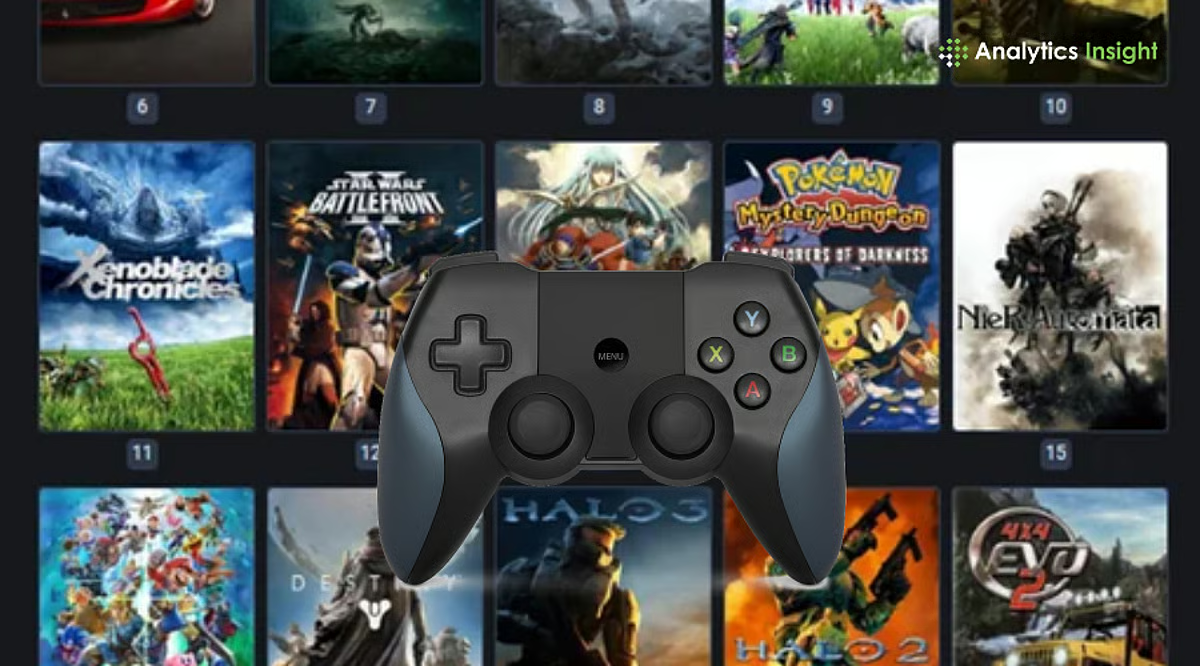
Video games have grown from simple pixel screens into huge interactive worlds where players can explore, compete, build, and solve problems. When people talk about the best video games of all time, they are not just talking about graphics or popularity. They are talking about games that changed how people play, think, and connect. These are the titles that players return to again and again. They feel fresh even after many years. Some introduced new mechanics. Others told powerful stories through gameplay. A few created entire genres that still shape modern releases. Ranking them is never easy, but we can look at gameplay quality, long-term influence, and replay value to understand why certain games sit at the top.
What Makes a Game One of the All-Time Greats
Not every popular game becomes one of the best video games of all time. True classics usually share a few strong traits. First, the gameplay feels tight and responsive. Controls make sense and reward practice. Second, the design offers a meaningful challenge without feeling unfair. Third, the game adds something new, whether it is a mechanic, a system, or a new way to interact with the world. Another big factor is replay value. Great games invite players back with different strategies, choices, or outcomes. Community support also matters. Games that build strong player communities often live longer and evolve through updates and player-created content.
Games That Defined Early Generations
Some of the best entries in gaming history came from earlier generations when hardware was limited, but creativity was high. These games built the base rules that modern developers still follow. Early platform and adventure titles taught players timing, movement, and puzzle-solving. Classic action games showed how level design guides player behavior without long tutorials. Many of these titles remain playable today because their core design is clean and focused. Even without modern visuals, they feel fair and engaging. That is a strong sign of lasting quality.
Action Games That Set the Standard
Action-focused titles often appear high on any list of the best video games of all time because they deliver direct, skill-based fun. These games rely on movement, combat timing, and quick decision-making. The best ones balance speed with control so players feel responsible for both wins and losses. Strong enemy design is also key. Memorable action games introduce new threats at the right pace, forcing players to learn and adapt. Over time, these games become skill playgrounds where experienced players can show mastery. That depth keeps them alive long after release.
Open World and Adventure Games That Changed Scale
Open-world and adventure-driven games raised the bar by giving players freedom. Instead of moving from one small level to the next, players explore large connected maps filled with secrets and side challenges. The best video games in this category succeed because exploration feels meaningful rather than empty. The world reacts to the player. Choices matter. Side missions feel like real stories instead of filler tasks. Good open-world design also guides players naturally through landmarks and environmental hints rather than constant markers. This makes discovery feel personal and earned.
Role Playing Games With Deep Systems
Role-playing games earn their place among the best video games of all time through depth and player choice. These titles allow players to build characters, develop skills, and shape outcomes. Strong role-playing design gives multiple ways to solve problems. You might talk, sneak, craft, or fight depending on your build. Progression systems feel rewarding because every upgrade changes how you play. The best examples also create detailed worlds with history, factions, and internal logic. Players feel like part of a living system rather than a visitor passing through.
Strategy and Simulation Games With Endless Replay Value
Strategy and simulation titles often have the highest replay value of any genre. Each session can unfold differently based on player decisions. That is why many appear in discussions about the best video games of all time. These games reward planning, adaptation, and long-term thinking. Good strategy design presents clear rules but allows complex outcomes. Small choices can create large effects over time. Simulation titles also stand out when their systems interact in believable ways. When players can experiment and see logical results, the experience stays fresh for years.
Multiplayer Games That Built Communities
Some games become all-time greats because of their impact on multiplayer. They create shared spaces where players compete or cooperate. The strongest multiplayer titles are built on balanced mechanics and fair systems. Skill matters, but teamwork and strategy also play a role. These games grow through community activity, tournaments, mods, and regular updates. A healthy multiplayer environment can keep a title active far beyond its launch window. Many of the best video games of all time are still played today because their competitive or cooperative design never gets old.
Indie Games That Proved Ideas Matter More Than Budget
Not every top-ranked game comes from a big studio. Independent developers have produced some of the best video games of all time by focusing on creative ideas and tight design. Indie titles often experiment with mechanics that large studios avoid. They take risks with structure, art style, and systems. When these risks work, the results feel new and personal. Players often connect strongly with these games because they feel handcrafted rather than mass-produced. Innovation, not budget, is what earns them long-term respect.
Why Replay Value Separates Good From Great
Replay value is one of the strongest signals of lasting quality. A game that feels finished after one playthrough rarely ranks among the best video games of all time. Great titles offer multiple paths, builds, endings, or strategies. Some use procedural systems, so each run changes. Others rely on deep mechanics that take time to master. When players return not out of habit but out of curiosity and a sense of challenge, the design has succeeded. Replay value turns a good purchase into a long-term hobby.
Final Thoughts
The best video games of all time are not defined by one feature. They combine strong gameplay, smart design, lasting influence, and high replay value. They respect player skill and curiosity. They introduce ideas that others build on for years. Lists will always change as new titles arrive, but true classics keep their place because they remain fun and meaningful across generations. The best approach is not just to rank them but to play them and see how their design still holds up today.
READ MORE: selftimes
