


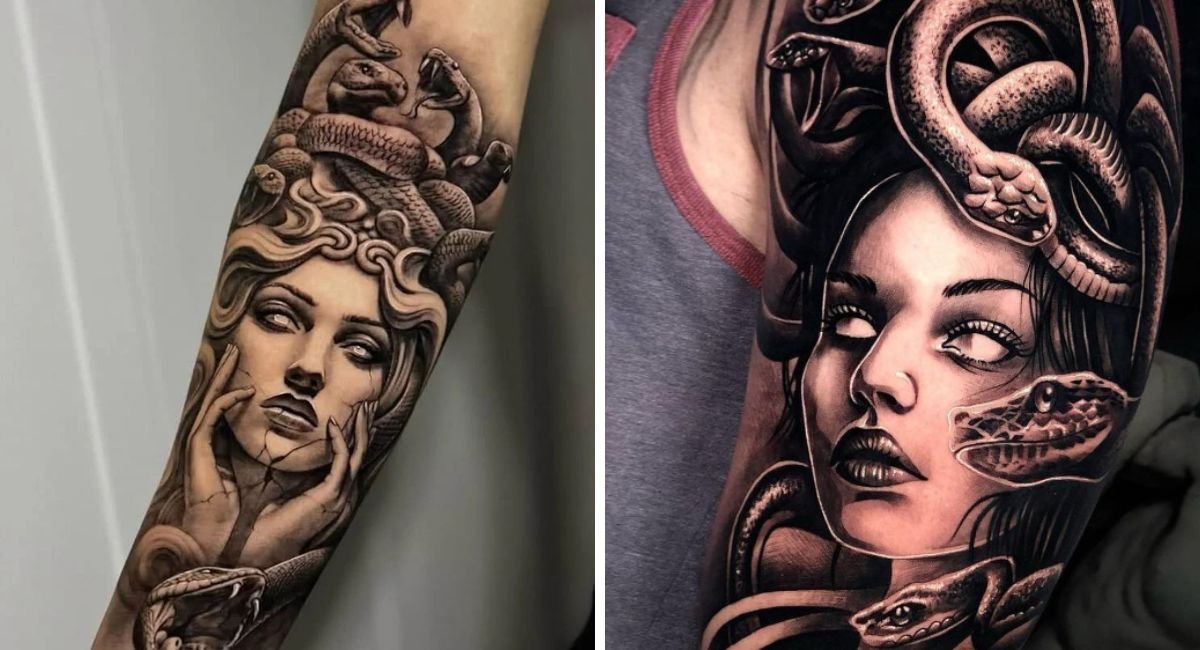
The medusa tattoo meaning has evolved into one of the most complex and emotionally powerful symbols in modern tattoo culture. Once viewed only through the lens of ancient mythology, Medusa has transformed into a deeply personal emblem representing strength, resilience, and rebirth. While her origins in Greek myth portray her as a fearsome creature with snakes for hair and a gaze that turns people to stone, modern interpretations have reshaped her identity into something far more layered and meaningful.
Today, people choose Medusa tattoos not only for their striking visual impact but also for the emotional depth they carry. Whether connected to personal experiences of hardship, identity transformation, or protection from negativity, Medusa has become a symbol that speaks to survival and empowerment in a powerful and unforgettable way.
Who is Medusa in Mythology?
To understand the Medusa tattoo meaning, it is important to first explore who Medusa is in ancient mythology. Medusa is one of the Gorgons from Greek mythology, originally described as a beautiful maiden who was transformed into a monster with serpents for hair and a deadly gaze. According to later Roman interpretations, particularly Ovid’s writings, her transformation was the result of being cursed after an encounter with Poseidon in Athena’s sacred temple.
Athena, angered by the desecration of her temple, punished Medusa by turning her into a creature so terrifying that anyone who looked directly at her would be turned to stone. However, earlier myths also suggest Medusa may have always been a monstrous guardian figure. Over time, her image was used in ancient Greece as a protective symbol known as the Gorgoneion, placed on shields and buildings to ward off evil. This duality—both victim and monster, both feared and protective—creates the foundation for the modern reinterpretation of her symbolism.
Medusa Tattoo Meaning in Modern Culture
In contemporary culture, the medusa tattoo meaning has shifted far beyond ancient storytelling. Today, Medusa is widely recognised as a symbol of empowerment, identity reclamation, and emotional strength. Many people interpret her image as a reflection of overcoming personal struggles and refusing to be defined by past experiences. Social media and tattoo communities have played a significant role in reshaping her image, turning Medusa into a figure of resilience rather than fear.
Her story is now often viewed through a lens of reclaiming narrative control, where what was once seen as a curse becomes a source of power. For many, the tattoo represents the idea that pain can be transformed into strength and that identity is not fixed but continuously evolving. This modern interpretation has made Medusa one of the most meaningful and widely chosen mythological tattoo designs today.
Survival, Trauma, and Reclaimed Identity

One of the most powerful interpretations of the medusa tattoo meaning is its connection to survival and trauma recovery. Many individuals choose this tattoo to symbolise overcoming deeply personal hardships, including emotional pain or abusive experiences. In this context, Medusa becomes a representation of reclaiming control over one’s own story.
Her gaze, once feared, becomes a metaphor for boundaries and self-protection. This interpretation emphasises the journey from vulnerability to empowerment, where the tattoo serves as a permanent reminder of inner strength. It is not just about what happened in the past, but about how a person has grown beyond it, rebuilt themselves, and embraced a stronger identity shaped by resilience and healing.
Protection, Power, and Feminine Energy
Another important aspect of the medusa tattoo meaning is its association with protection and feminine power. In modern tattoo culture, this idea continues but has expanded into a broader expression of personal boundaries and emotional defence.
Her fierce and unapproachable appearance symbolises the strength to say no, to stand firm, and to protect one’s emotional space. At the same time, she represents feminine energy that is not passive or subdued but bold, independent, and unapologetically powerful. This dual nature—protective yet defiant—makes Medusa a compelling symbol for those who want to express inner strength and self-respect through body art.
Design Variations and Their Symbolism
The medusa tattoo meaning can also change depending on the design style and elements included in the artwork. Some tattoos depict Medusa with highly detailed, realistic features, emphasising her human side, while others focus more on her monstrous form with coiling snakes and intense expressions. Additional elements like mirrors, swords, or shattered stone heads can further deepen the symbolism. For example, a mirror may represent self-reflection and truth, while a dagger or sword can symbolise protection and readiness to defend oneself. Snake imagery often highlights transformation, renewal, and the ability to shed past identities.
Some designs even portray Medusa in a more sorrowful or contemplative state, emphasising her tragic mythological background rather than just her power. Each variation adds a unique layer of meaning, allowing the tattoo to become a highly personal statement shaped by the wearer’s interpretation and emotional connection.
FAQs
1. What does a Medusa tattoo symbolise today?
A Medusa tattoo commonly symbolises strength, transformation, protection, and personal empowerment in modern interpretations.
2. Is Medusa only related to trauma recovery?
No, while some associate it with survival stories, others choose it for mythology, aesthetics, or symbolic protection.
3. Why is Medusa considered a feminist symbol?
She represents feminine power, resistance, and reclaiming identity from a traditionally misunderstood mythological figure.
4. Do all Medusa tattoos have the same meaning?
No, the medusa tattoo meaning is highly personal and varies depending on the wearer’s experience and intention.
5. What makes Medusa tattoos so popular?
Their combination of striking visuals, deep mythology, and layered symbolism makes them both meaningful and artistically appealing.
Conclusion
The medusa tattoo meaning is a powerful blend of mythology, personal interpretation, and emotional depth. From ancient protective symbolism to modern expressions of survival and empowerment, Medusa has evolved into a figure that represents far more than fear or punishment. She embodies transformation, resilience, and the ability to reclaim one’s identity after hardship. Whether chosen for personal healing, symbolic protection, or appreciation of mythological art, a Medusa tattoo remains one of the most meaningful and visually compelling designs in contemporary tattoo culture.
READ MORE: selftimes
