


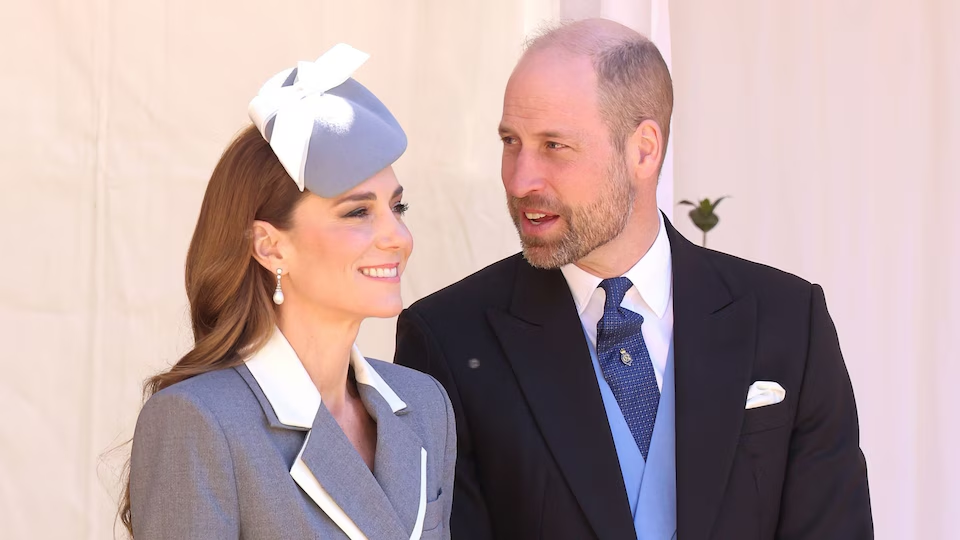
The phrase “Prince William Kate Middleton move” has been gaining attention as observers try to understand not just a physical relocation, but a broader shift in how the modern British royal family is evolving. At its core, this move represents more than geography—it reflects changing priorities, generational leadership, and a deliberate effort to redefine royal life in a contemporary world.
To fully grasp its significance, it’s important to look at the individuals at the centre of it: Prince William and Kate Middleton. As senior members of the royal family, their decisions carry symbolic weight, influencing public perception, institutional direction, and even national identity.
A Shift Toward Simplicity and Family Life
One of the most notable aspects of the Prince William Kate Middleton move is the clear emphasis on family. Unlike previous generations, where royal duties often dictated personal life, William and Kate have made conscious decisions to prioritise their children’s upbringing.
Their move—most notably to Adelaide Cottage in Windsor—was widely interpreted as a desire to create a more grounded environment for their three children. Away from the formalities of central London, Windsor offers a quieter setting, closer to nature and somewhat removed from constant public scrutiny.
This decision reflects a broader shift in royal parenting. Rather than raising children in highly institutional environments, William and Kate appear committed to providing as normal a childhood as possible. School runs, outdoor play, and a tighter-knit family routine are all part of this vision.
The Symbolism of Location
Location has always mattered deeply within the royal family. Residences are not just homes; they are symbols of power, responsibility, and history. The Prince William Kate Middleton move carries symbolic meaning in several ways.
Windsor, for instance, is closely associated with stability and continuity. It is also tied to Queen Elizabeth II, who spent much of her later life there. By positioning themselves near Windsor Castle, William and Kate signal both respect for tradition and readiness to step into greater responsibility.
At the same time, their choice of a relatively modest home compared to other royal residences suggests a subtle but meaningful departure from extravagance. It sends a message of relatability—an attempt to bridge the gap between the monarchy and the public.
Preparing for Future Roles
Another layer of the Prince William Kate Middleton move lies in preparation. As the direct heirs to the throne, William and Kate are not just managing present duties—they are positioning themselves for the future.
Following the ascension of King Charles III, William became the Prince of Wales, a role that carries significant responsibility. This transition required adjustments in both public duties and private life.
Relocating closer to Windsor places them at the heart of royal operations while still allowing flexibility. It enables them to be physically closer to the monarch, facilitating smoother coordination of responsibilities. This proximity is particularly important during a period of transition within the monarchy.
A Modern Approach to Royal Duty
The Prince William Kate Middleton move also highlights a modern approach to royal duty. Unlike previous generations, who often adhered strictly to tradition, William and Kate are known for adapting their roles to reflect contemporary values.
Their engagements often focus on issues such as mental health, environmental sustainability, and early childhood development. By choosing a lifestyle that aligns with these priorities, they reinforce their public image as relatable and forward-thinking leaders.
Their move supports this approach by providing a base that allows for both official duties and personal initiatives. It reflects a balance between obligation and authenticity—something that resonates strongly with younger generations.
Public Reaction and Media Attention
Unsurprisingly, the prince william kate middleton move has attracted widespread media coverage and public interest. Royal watchers analyse every detail, from the size of the residence to its proximity to schools and other royal properties.
Public reaction has largely been positive. Many people see the move as a refreshing change—an indication that the monarchy is evolving in response to modern expectations. The emphasis on family, simplicity, and relatability has strengthened William and Kate’s popularity.
However, there are also critics who question whether such moves are truly transformative or merely symbolic. This ongoing debate highlights the complex relationship between the monarchy and the public.
Balancing Tradition and Change
One of the most fascinating aspects of the Prince William Kate Middleton move is how it balances tradition and change. The royal family is a deeply rooted institution in history, yet it must remain relevant in a rapidly changing world.
William and Kate seem to understand this balance היט. Their decisions often reflect respect for tradition while subtly introducing new ideas. For example, choosing Windsor honours royal heritage, while their lifestyle choices introduce a more modern dynamic.
This dual approach is essential for the monarchy’s long-term survival. It allows them to maintain their identity while adapting to societal shifts.
The Role of Kate Middleton
While much attention is often focused on Prince William, Kate Middleton plays an equally important role in the Prince William and Kate Middleton move. Her influence is evident in the emphasis on family life, education, and social issues.
Kate’s background—coming from a non-aristocratic family—brings a different perspective to the royal household. She is often seen as a bridge between tradition and modernity, helping to humanise the monarchy.
Her involvement in early childhood development initiatives aligns closely with the family-oriented nature of their move. It reinforces the idea that their decisions are guided by both personal values and public responsibilities.
A Calculated Choice, Beyond Personal Preferences
It’s important to recognise that the Prince William Kate Middleton move is not purely personal. Every decision made by senior royals has strategic implications.
Relocating to Windsor positions them within a key royal hub, enabling them to respond quickly to national and international responsibilities. It also aligns with broader institutional goals, such as streamlining royal operations and reducing costs.
This strategic dimension adds another layer of significance to their move. It demonstrates that even seemingly personal choices are carefully considered within the context of the monarchy’s future.
The Impact on the Royal Family Dynamic
The prince william kate middleton move also affects the internal dynamics of the royal family. Proximity to Windsor brings them closer to other senior royals, facilitating collaboration and communication.
At the same time, it allows for a degree of independence. By establishing their own household away from central London, William and Kate can shape their identity as future leaders.
This balance between unity and independence is crucial. It ensures that they remain connected to the broader institution while developing their own approach to leadership.
A Reflection of Broader Societal Changes
In many ways, the Prince William Kate Middleton move mirrors broader societal trends. Across the world, there is a growing emphasis on work-life balance, family well-being, and mental health.
By prioritising these values, William and Kate align themselves with the concerns of ordinary people. This alignment enhances their relatability and strengthens their connection with the public.
It also reflects a shift in expectations of leadership. Today’s leaders are expected to be not just authoritative figures, but also empathetic and authentic individuals.
Looking Ahead
As the monarchy continues to evolve, Prince William and Kate Middleton’s move will likely be seen as a defining moment in its transformation. It represents a deliberate effort to modernise while preserving tradition.
Future developments will reveal how effective this approach is. Will it succeed in making the monarchy more relevant? Will it inspire further changes within the institution? These questions remain open.
What is clear, however, is that William and Kate are taking a thoughtful and measured approach to their roles. Their decisions reflect a deep understanding of both their responsibilities and the changing world around them.
Final Thoughts
The phrase “Prince William Kate Middleton move“ encapsulates a complex and multifaceted shift within the British royal family. It is about more than relocation—it is about redefining what it means to be a modern royal.
Through their choices, Prince William and Kate Middleton are shaping the future of the monarchy. They are demonstrating that tradition and change can coexist, and that leadership can be both authoritative and relatable.
As public expectations continue to evolve, their approach may well serve as a blueprint for the next generation of royal leadership.
READ MORE: selftimes
