


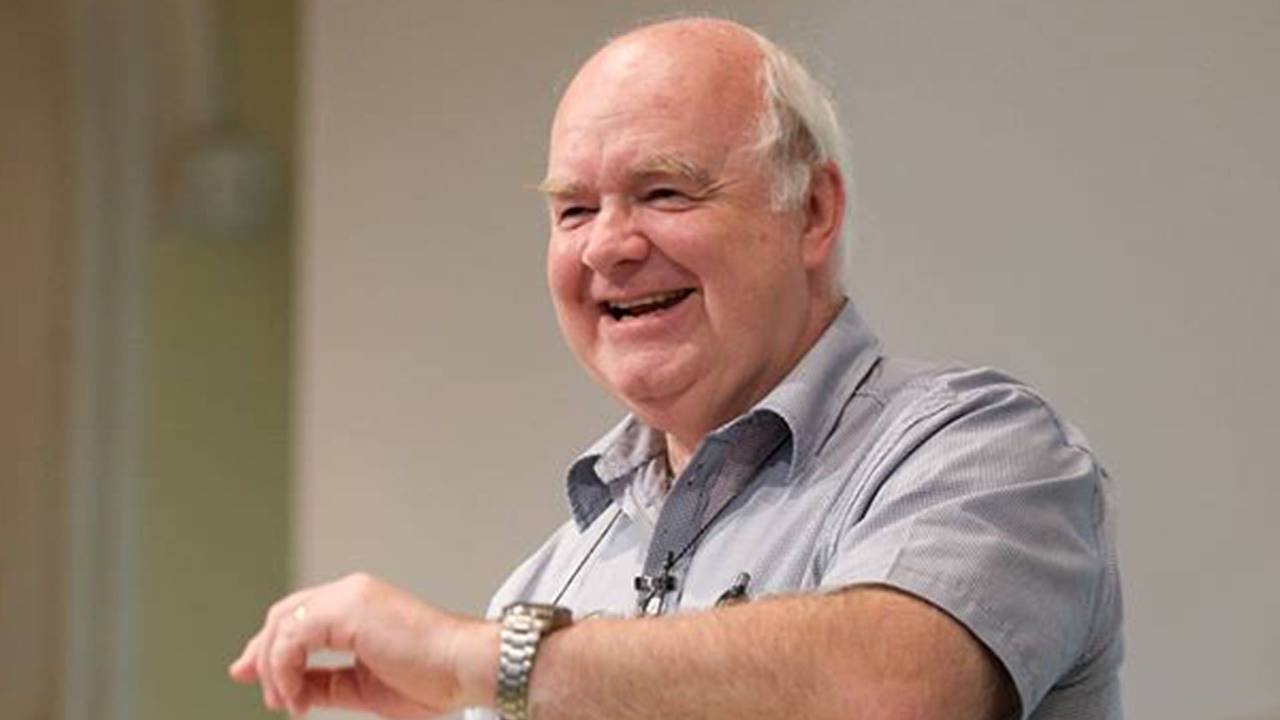
In an age where faith is often portrayed as a private feeling and reason as the exclusive property of science, John Lennox stands out as a thinker who refuses to accept that divide. Known globally as a mathematician, philosopher, and Christian intellectual, Lennox has spent decades arguing that belief in God is not a retreat from rational thinking but a position that can stand firmly within it.
His work challenges the idea that science and faith are locked in conflict, instead presenting them as complementary ways of understanding reality. Through teaching, writing, and public debate, John Lennox has become one of the most recognizable voices defending intellectual Christianity in the modern world.
Early Life and Academic Formation
John Lennox’s intellectual foundation was laid early through a deep exposure to mathematics and logical reasoning. Raised in Northern Ireland, he demonstrated a strong aptitude for analytical thinking from an early age.
This natural curiosity eventually led him to study mathematics at some of the most respected academic institutions worldwide. His educational journey was not merely about acquiring credentials; it shaped his disciplined approach to problem-solving and truth-seeking. Mathematics, with its demand for clarity, precision, and consistency, became the lens through which Lennox learned to evaluate arguments—whether scientific, philosophical, or theological. This rigorous training would later define his distinctive style: calm, structured, and deeply reasoned.
Career as a Mathematician and Scholar
Lennox built a distinguished academic career as a mathematician, earning respect among peers for his work in algebra and logic. His years in academia were marked by teaching, research, and mentoring students who would pursue their own scholarly work. Importantly, Lennox never saw his scientific work as separate from more profound philosophical questions. Instead, he viewed mathematics as evidence of an ordered and intelligible universe—one that invites questions about meaning and origin. His academic credibility plays a crucial role in his public influence, as he speaks not as an outsider to science but as someone firmly grounded within it.
Faith and Reason: A Unified Vision
At the heart of John Lennox’s message is the conviction that faith and reason are not enemies. He argues that Christianity, when properly understood, does not ask people to abandon critical thinking. On the contrary, it encourages the pursuit of truth wherever it leads. Lennox often points out that many of the founders of modern science were motivated by their belief in a rational Creator who designed a universe governed by laws.
From this perspective, science becomes possible precisely because the universe is orderly and intelligible. Lennox challenges the assumption that belief in God is irrational by emphasizing that all worldviews—including atheism—rest on foundational assumptions that cannot be proven purely by science.
Engagement with Science and Modern Thought
John Lennox is particularly known for addressing claims made by scientific materialism—the belief that physical matter is all that exists. He acknowledges the power and success of science in explaining natural processes but draws a clear boundary between scientific explanation and philosophical interpretation. According to Lennox, science can describe how things work, but it cannot answer why there is something rather than nothing, or why mathematical laws govern the universe. By carefully separating science from ideology, he argues that belief in God does not compete with scientific explanations but provides a deeper framework within which they make sense.
Public Debates and Intellectual Dialogue
One of the defining features of Lennox’s public life is his willingness to engage in open debate with prominent skeptics and atheists. These discussions are marked not by hostility but by respectful dialogue. Lennox’s debating style is calm and methodical, emphasizing clarity rather than confrontation.
He often emphasizes listening carefully to opposing views before responding, demonstrating intellectual humility alongside confidence in his arguments. These debates have played a significant role in bringing complex philosophical and theological issues to broader audiences, particularly students and young professionals grappling with questions of belief.
Writing and Communication Style
John Lennox’s books and lectures reflect his ability to communicate complex ideas in an accessible way. He avoids technical jargon whenever possible, instead explaining concepts in everyday language and practical examples.
This approach has helped his work reach far beyond academic circles. His writing often addresses common objections to Christianity, such as the problem of suffering or the relationship between evolution and belief in God. Rather than offering simplistic answers, Lennox invites readers into a thoughtful exploration of these challenges, encouraging them to think deeply and critically.
Christianity in a Secular Age
In a world increasingly shaped by secular assumptions, Lennox argues that Christianity still offers a coherent and compelling worldview. He contends that removing God from the picture does not eliminate belief but replaces it with alternative faith commitments, such as faith in human progress or scientific inevitability. Lennox maintains that Christianity provides a solid moral and philosophical foundation, particularly when addressing questions of human dignity, purpose, and ethics. His work speaks directly to those who feel pressured to separate intellectual integrity from spiritual conviction.
Influence on Students and Global Audiences
Much of John Lennox’s influence can be traced to his engagement with students and young thinkers. University lectures, conferences, and public talks have allowed him to interact with audiences at pivotal stages of intellectual development.
Many listeners describe his work as freeing, offering permission to explore faith without abandoning reason. Lennox’s global reach has expanded through recorded lectures and written works, making his ideas accessible to people from diverse cultural and educational backgrounds. His emphasis on respectful dialogue resonates in an era often defined by polarized debate.
Criticism and Response
Like any prominent public intellectual, Lennox has faced criticism. Some argue that his arguments rely too heavily on philosophical reasoning rather than empirical evidence, while others challenge his interpretation of science and theology. Lennox does not dismiss these critiques but engages with them directly, often refining his arguments in response. He acknowledges the limits of human knowledge and emphasizes that humility is essential in any serious search for truth. This willingness to engage critics rather than silence them strengthens his credibility as a thinker committed to honest inquiry.
Legacy and Continuing Relevance
John Lennox’s legacy lies not only in the arguments he has made but in the tone he has set for intellectual engagement. At a time when discussions about faith and science often generate more heat than light, Lennox models a way forward rooted in reasoned dialogue and mutual respect.
His work continues to influence discussions of belief, knowledge, and meaning, particularly among those who reject the claim that faith must be irrational. As debates about science, ethics, and worldview intensify, Lennox’s voice remains a steady reminder that intellectual Christianity is not a relic of the past but a living and thoughtful tradition.
Conclusion
John Lennox represents a rare combination of academic rigor, philosophical clarity, and personal conviction. By insisting that faith and reason belong together, he has challenged generations of thinkers to reconsider their assumptions about belief and knowledge.
His contributions extend beyond apologetics into a broader cultural conversation about how humans seek truth in a complex world. Whether one agrees with his conclusions or not, Lennox’s work stands as a compelling example of how intellectual honesty and spiritual inquiry can coexist, enriching both the mind and the search for meaning.
READ MORE: Self Times
