



A Bright Light in Her Community
Lajoya McCoy was a 31-year-old woman from Monrovia, California, known for her strong work ethic, her love for her two children, and her dedication to building a better life. She worked as a budget analyst for the U.S. Department of Justice and was admired by friends, family, and coworkers for her positivity and sense of responsibility. Her life seemed to be on a steady path of progress. She was raising her children, managing her career, and maintaining a presence on social media where she frequently posted about her daily life and experiences. However, beneath the surface, Lajoya was dealing with the aftermath of a difficult breakup that would later become central to her tragic story.
The Disappearance That Sparked a Citywide Search
In June 2015, concern quickly spread when Lajoya McCoy stopped responding to phone calls and failed to show up for work. It was highly uncharacteristic of her to be out of contact, especially given her role as a mother and professional. Friends and family immediately sensed that something was wrong. After days of silence, a missing persons report was filed, and authorities launched an investigation. The Monrovia Police Department began working with local volunteers to trace her steps. Her car was eventually found, but there was no sign of Lajoya.
The lack of communication and activity on her social media accounts only deepened concerns. Investigators started looking into her personal life, including recent relationships, and zeroed in on an ex-boyfriend, who had a documented history of controlling behaviour. Her disappearance was not just a tragic anomaly; it hinted at something more sinister.
A Grim Discovery
Several days after she was reported missing, authorities found Lajoya McCoy,s body in the trunk of her car, which had been abandoned on a residential street in Los Angeles County.The discovery shattered all hope, confirming the heartbreaking reality her loved ones had feared.
According to the coroner,s report, she had been strangled to death. The condition of the crime scene suggested the murder had not been random; it was targeted and personal.
This revelation shocked the Monrovia community. Lajoya,s murder wasn,t just another statistic. It struck a nerve among those who knew her and among advocates fighting against domestic violence. It underscored the vulnerability that many women face even after leaving a toxic or abusive relationship.
Piecing Together the Evidence
Once her body was found, investigators shifted their focus to solving the homicide. Their attention turned to Lajoya,s ex-boyfriend, Derrick Smith. Their relationship had ended months earlier, but there were reports of ongoing tension, including alleged stalking and harassment. Investigators reviewed surveillance footage, phone records, text messages, and location data from both Smith and McCoy,s devices. They discovered inconsistencies in Smith,s alibi and behaviour that aligned with the time of Lajoya,s disappearance.
Search warrants were issued, and forensic analysis began to piece together the last hours of Lajoya,s life. Authorities found physical evidence that placed Smith at the scene. His digital footprint also betrayed his movements, helping law enforcement reconstruct a timeline that ultimately pointed to his involvement in her death. The case against him grew stronger with each piece of data.
Arrest and Legal Proceedings
Eventually, Derrick Smith was arrested and charged with the murder of Lajoya McCoy. His arrest brought a sense of temporary relief to her family and community, though the legal battle was only beginning. The prosecution presented a case rooted in digital evidence, witness testimony, and motive. They argued that Smith could not accept the end of the relationship and acted out of jealousy and rage.
During the trial, testimonies painted a picture of a man who had become increasingly obsessed and controlling. Friends of Lajoya testified that she had expressed fear in the weeks leading up to her death. The prosecution emphasised how her efforts to move on with her life may have triggered Smith,s violent actions. Eventually, the jury found him guilty, and he was sentenced to a lengthy prison term. Justice, at least in the legal sense, was served.
The Broader Message: Domestic Violence is Everyone,s Concern
The story of Lajoya McCoy is a tragic reminder of how dangerous domestic violence can be, even after a relationship ends. Far too often, people underestimate the risk posed by controlling or abusive partners. Lajoya did everything many are advised to do: she left the relationship, focused on her children, and tried to rebuild her life. Yet that wasn,t enough to shield her from the escalating threat.
According to national statistics, a significant portion of female homicide victims are killed by intimate partners. Lajoya,s case fits into this grim pattern. Her murder was not a random act of violence. It was the result of unresolved aggression and possessiveness—warning signs that had been present but ultimately not enough to prevent the tragedy. It raises questions about what more can be done to protect those at risk, especially when emotional or psychological abuse escalates into physical violence.
The Community Response and Lajoya,s Legacy
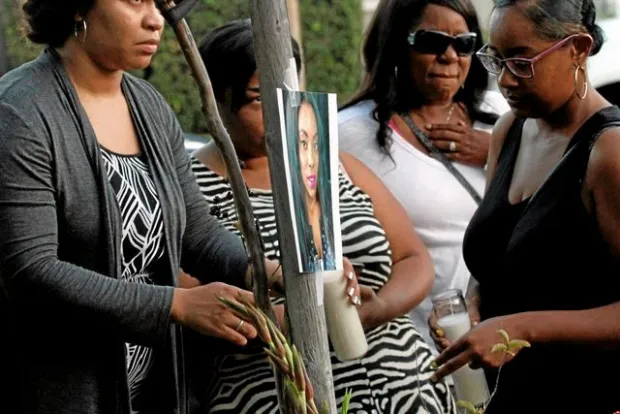
In the aftermath of Lajoya McCoy,s murder, her family and community came together to honour her memory. Vigils were held, and her story was shared in media outlets to raise awareness about domestic violence. Advocates used her case to push for stronger protective measures and better resources for women trying to leave unsafe relationships.
Her children, left to grow up without their mother, became the focal point for many of these efforts. Fundraisers were established to support them and ensure they would have access to the opportunities Lajoya had worked hard to provide. The community also pushed for more education on recognising red flags in relationships and the importance of taking threats seriously.
While justice in court was achieved, many argue that true justice would have been Lajoya living her life, raising her children, and continuing her career. Her death left a hole that cannot be filled, but her legacy lives on in the changes her story has inspired.
Learning from Tragedy
The tragic end of Lajoya McCoy,s life offers lessons that society cannot afford to ignore. It highlights the need for early intervention, robust support systems, and community vigilance when someone is in danger. Too often, warning signs are dismissed or underestimated, and the consequences can be fatal. Law enforcement, social services, and everyday people must work together to identify risks and protect those in vulnerable situations.
This case also underscores the value of digital forensics in modern investigations. From text messages to GPS data, technology played a crucial role in solving Lajoya,s murder. But beyond the courtroom, the real work lies in prevention. The focus must shift from punishing violence after the fact to stopping it before it occurs.
Conclusion: A Life Remembered
Lajoya McCoy was more than a victim. She was a mother, a professional, a friend, and a member of her community. Her story should not be reduced to headlines or true-crime fascination. It should be a call to action. Domestic violence can affect anyone, regardless of background, status, or strength. Lajoya tried to move forward, to live peacefully and care for her children. Her murder was an injustice that echoed far beyond her immediate circle.
Remembering Lajoya McCoy means honouring her life, acknowledging the systemic issues that contributed to her death, and doing everything possible to ensure that others in her situation have the support and protection they need. Her legacy, though born of tragedy, continues to drive change and awareness—a reminder that every lost life is a call for a safer, more just world.
READ MORE: selftimes
