


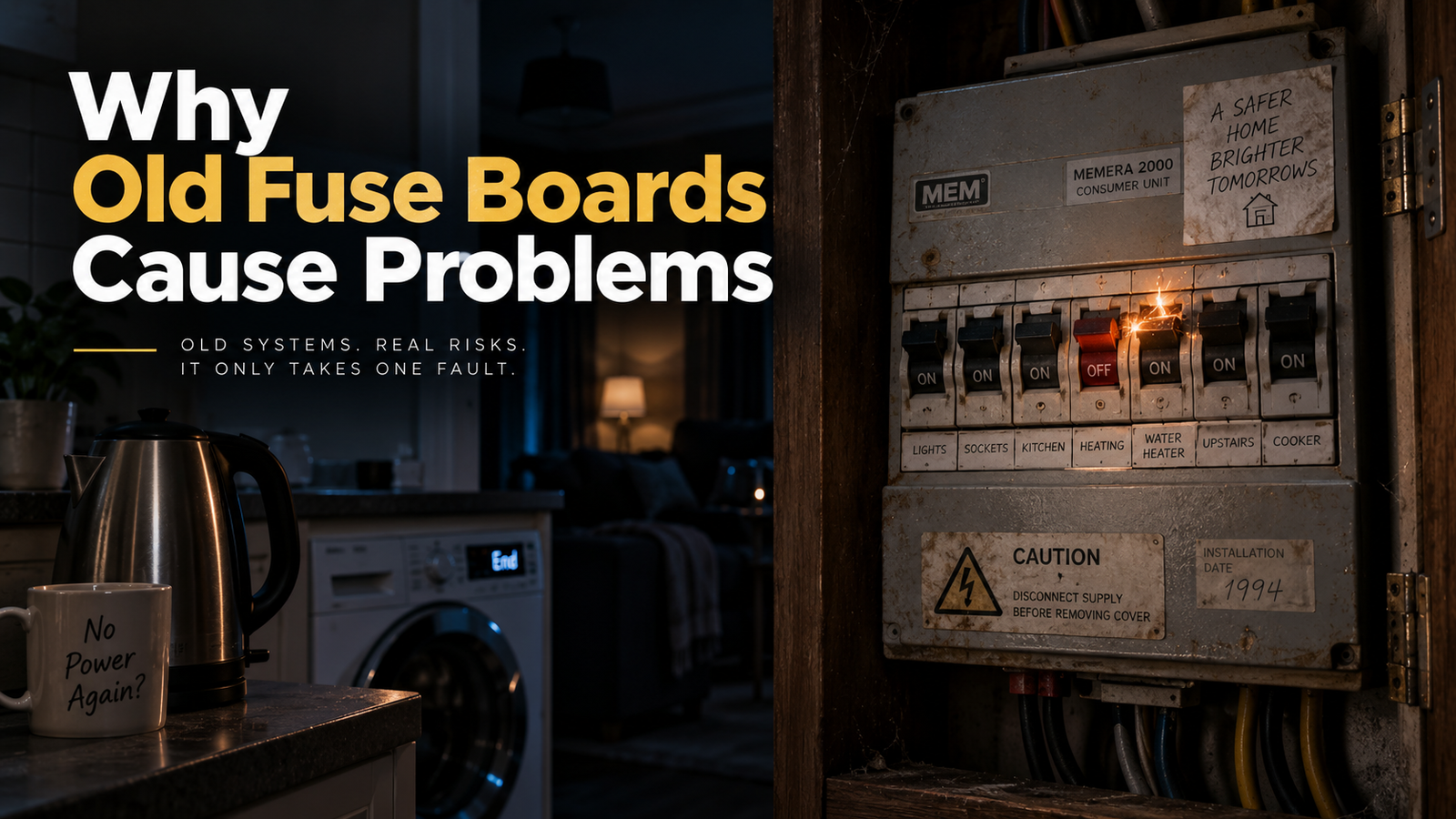
Have you ever experienced that sudden, eerie silence where the kettle stops boiling, the washing machine dies, and you’re left sitting in total darkness? You didn’t do anything extreme; you just wanted a cup of tea while doing laundry.
But somewhere in a dark cupboard, your old fuse board has decided it’s had enough of your 21st-century lifestyle.
Most of us never even think about these grey boxes until they leave us stranded. So, if your home is still running on a vintage model, keep reading to find out why it’s struggling to keep up.
Modern Demand
Think back to when these boards were first installed. The average UK home barely needed two or three kilowatts of power.
Back then, heavy usage meant running a couple of light bulbs, a radio, and maybe a single-bar electric fire if you were feeling adventurous. The system was perfectly adequate for that time.
Now, fast forward to today. You’re asking that same box to handle tumble dryers, heavy-duty gaming PCs, rapid phone chargers, and air fryers that draw more power than a small industrial plant.
Our homes are packed with technology that an electrician from the 1960s couldn’t even dream of, and the infrastructure underneath it all hasn’t kept pace.
You aren’t doing anything wrong by living in the 21st century, but you’re essentially forcing a system built for the black-and-white TV era to power a modern smart home. At some point, the system may give up altogether, leaving you stuck in the dark.
Constant Tripouts
If you find yourself constantly losing power, your fuse board is trying to tell you something. With a modern consumer unit, a tripped switch is no big deal; you just need to click it back into place and move on with your day.
However, with an older board, you have to pull out a row of identical ceramic holders one by one and figure out which wire burned through.
Let’s not forget about that rewirable fuse you’ve been meaning to replace, too. To fix it, you have to shut off the power, find the right carrier, and try to thread a tiny, flimsy wire through tiny terminals.
More importantly, when fuses keep blowing on the same circuit, it’s a clear warning sign. If you ignore it, the underlying problem won’t fix itself. More often than not, you’ll end up stumbling towards that cramped little cupboard in the dark far sooner than you expected.
Safety Gaps
Losing power every few days is frustrating enough on its own. Unfortunately, an old fuse board also brings a whole list of more serious safety concerns with it.
Modern electrical boxes come fitted with RCDs (residual current devices). They constantly monitor the electricity flow and can cut the power in milliseconds if they detect a faulty appliance, a frayed wire, or an accidental shock.
However, older fuse boards don’t have them. While some homes have had standalone RCDs spliced into the system over the years, plenty of properties across the UK are still running with zero protection.
Your house isn’t going to suddenly catch fire tomorrow, but your safety net is much thinner than it should be.
Plus, current UK wiring regulations now require this protection for almost every circuit. If your board doesn’t meet these standards, it can quickly become a headache when you want to do home renovations, sell the property, or look for insurance.
DIY Repairs
If you live in an old house, your fuse board has likely accumulated decades of ‘temporary fixes.’ Over the years, the previous owners might have added new sockets to circuits that were already struggling or wrapped questionable connections in layers of electrical tape.
Unfortunately, these DIY repairs don’t usually show obvious signs of trouble right away. A loose connection or a sketchy bit of wiring can sit there for years before it finally causes a fault.
If your board has been poked and prodded by multiple hands over the decades, there’s a good chance something in there doesn’t meet any safety standards on the books.
Want to find out what’s going on behind that panel? A professional can spot these DIY projects quickly and fix them.
Redoing these repairs might feel expensive now, but it’s nothing compared to the cost of cleaning up the mess these problems can cause later on.
Rare Replacement Parts
Even if you’re determined to keep the old system going, reality will eventually catch up with you. Older boards rely on highly specific ceramic holders, fuse carriers, and wire ratings that manufacturers simply don’t make anymore.
You might find a few leftover bits at B&Q or Screwfix, although the selection shrinks more every year. If your board dates back to the 1950s or 1960s, finding the right part usually means hunting through obscure speciality wholesalers or scrolling through random eBay listings.
That’s a lot of effort just to keep your old system on life support. In fact, if you call out an electrician for a quick fix, they might tell you the part they need isn’t available anymore.
When that happens, you’ll be forced into an upgrade on the spot, and it’s always better to make that change on your own terms rather than during an emergency.
Liability Concerns
When an insurer reviews your property, your electrical setup is one of the first things they look at.
An outdated rewirable fuse board, especially one that hasn’t seen an inspector in a decade, tends to make insurers nervous. This can lead to skyrocketing premiums, specific exclusions for electrical damage, or they might just flat-out refuse to cover you.
You could be a loyal customer for years, only to find your policy thrown into question during a routine renewal. If you’re currently house hunting, this is definitely something you want to budget for early on.
If you’re living in Chiswick, you probably have a Victorian or Edwardian home that has been rewired over the decades. An electrician Chiswick residents trust can tell you what your system needs before an insurance surveyor turns it into a dealbreaker.
Conclusion
Old fuse boards don’t flash warning signs or make loud noises to let you know they’ve reached their limit. Instead, they quietly max out, pop a fuse at the worst possible moment, and leave your home unprotected.
But once you get yours sorted out and upgraded, you can finally plug in the air fryer, run the washing machine, and boil the kettle all at the same time. Honestly, that peace of mind alone is well worth the cost.
READ MORE: selftimes
